When Glen Putnam learned earlier this month that the state of New Hampshire would no longer certify his family’s dairy farm in Piermont as organic, it came as a shock.
“If your certification runs out, you’re dumping your milk on the ground,” Putnam said of the news. He sells his milk to Stonyfield, which does not accept conventional milk.
“It would mean, if I stay organic, that I find someone else to certify me and start all over,” he added.
He struggled to stay on top of the organic certification paperwork between his day job, his farm chores and his two kids, and he did not relish the prospect of starting over with a new certifier. The Putnams’ Piermont farm had not been breaking even, and he and his wife, Meredith, had already decided to sell rather than “throwing effort after foolishness.”
They will have to surrender their certification by Dec. 30 and may lose the last of their dairy income.
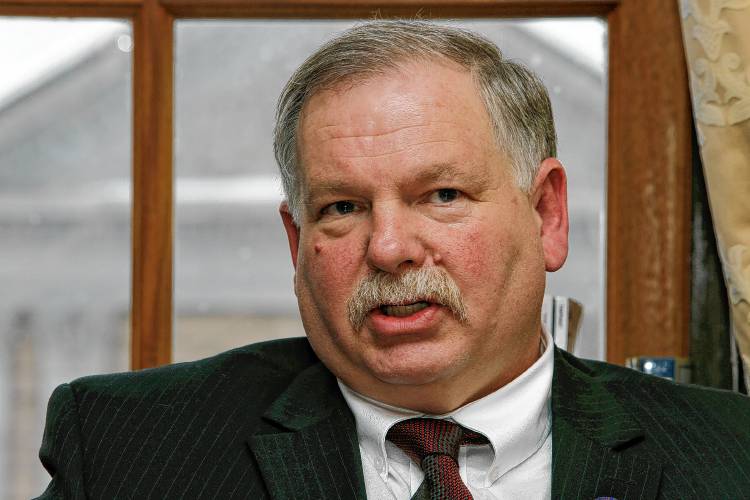
Agriculture Commissioner Shawn Jasper
The state Department of
Agriculture, Markets and Food, citing budget constraints, notified 17
certified organic livestock operations — as well as 27 processors and
handlers whose products include coffee, bread and vodka — that the state
would no longer certify them as organic. It will continue to certify
the majority of the farms it services, including fruit and vegetable
operations.
The
farmers who received the department’s letters had two options: They
could surrender their organic certification by Dec. 30, or they could
apply for certification with another certifier, often private organic
associations. If they
submitted proof of an application, they could continue to list the state
as their certifier for another six to 12 months.
“Overall, the work we have to do is increasing,” said Agriculture
Commissioner Shawn Jasper. The U.S. Department of Agriculture sets the
standards for organic certification. He described it as “a complex and
strict standard” with inspections, audits and reporting. New Hampshire
is one of only 15 states that certifies organic farms.
“We’ve
been unable to keep up with changes and all of the requirements,”
Jasper said. “It’s just been too much for the small staff that we have.”
Jasper
emphasized that the department charges much less for organic
certification than private certifiers. For example, a farm that paid the
state $800 to maintain its USDA organic status each year would pay a
private certifier over $3,000, he said.
Yet Jasper said the department is “certainly not charging anywhere near what it
realistically costs to do.” To his knowledge, it had not increased its
certification fees in more than 15 years.
“My
personal feeling is that user fees should be covered by users. We
shouldn’t be looking to other taxpayers to cover the cost,” he said.
The
problem, though, is bigger than the state’s limited resources. There is
a nationwide workforce shortage of certifiers, said Nikki Kolb, who
works for Northeast Organic Farming Association of New Hampshire.
Kolb
said the state’s announcement came at a time when “the state should be
working to build up organic certification and work with farmers to
increase resilience in our state and food production.” She listed widely
shared benefits from organic farming, including soil health and food
security. — VALLEY NEWS