Governor tells Executive Council they can set conditions for sale
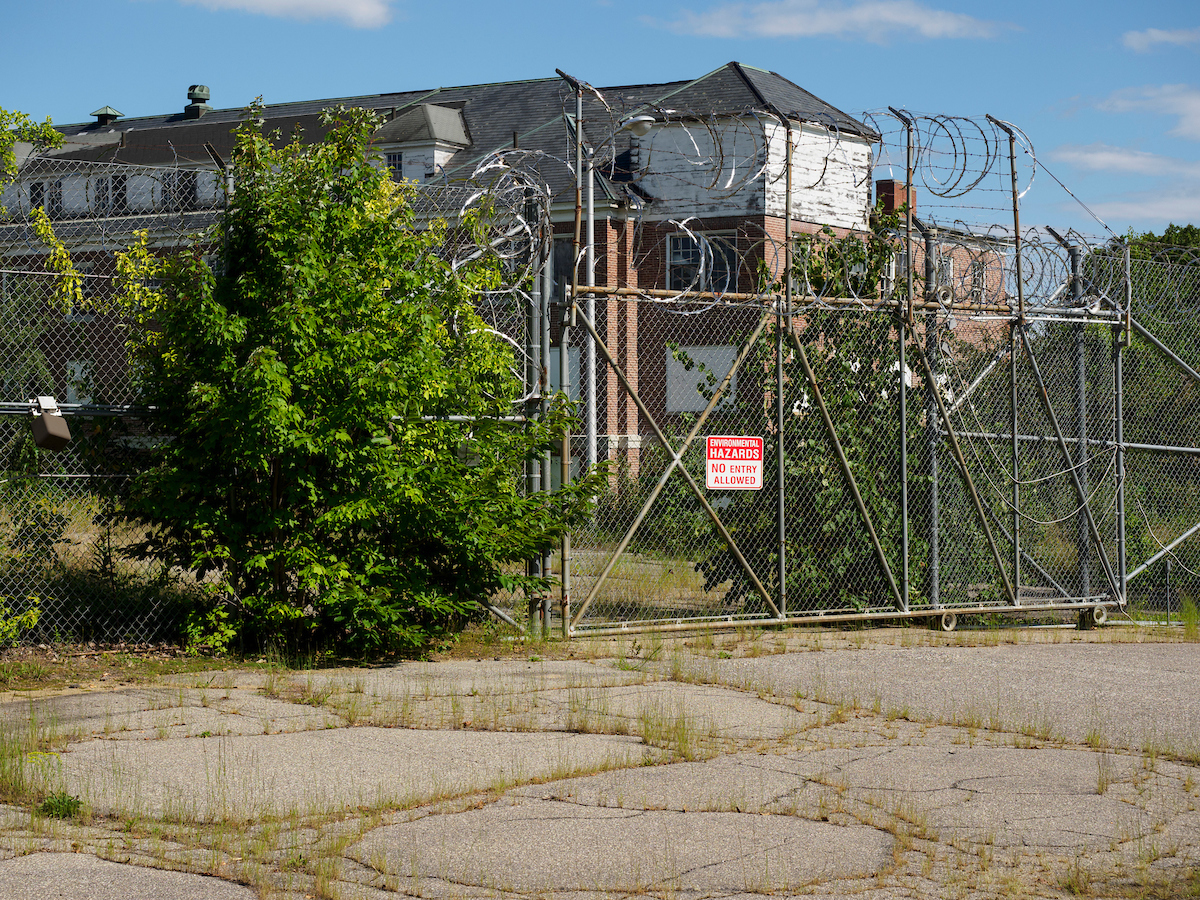
The Laconia property was for many years the site of the Laconia State School and most recently home to a prison. (Alan MacRae/New Hampshire Bulletin)
A recent law change requested by Gov. Chris Sununu allows him to bypass the typical review process and sell the 220-acre former Lakes Region prison property in Laconia with just three votes of the Executive Council. But Sununu told councilors they can set any conditions they like on a future buyer.
Councilor Joe Kenney, whose district includes the site, set a first condition, moving to table a proposed contract with a brokerage firm to market the property until interested parties can see it. The council supported his request unanimously.
Discussions of possible conditions will include the city of Laconia’s redevelopment goals for the site and whether the state’s backup 911 call center and Lakes Regional Mutual Fire Aid, which lease buildings on the site, will have to spend millions to relocate. Also on the list will be access to Ahern State Park, which is adjacent to the site but cannot be reached without going across the property.
“The council has the ultimate say on whether this property is sold,” Sununu said during last week’s Executive Council meeting. “Any condition the council would like to see or anything like that, that’s the empowerment of this body to ensure that any conditions asked for by the city or the state or the town, that’s this body’s responsibility. And we can do it almost any way we want.”
Laconia Mayor Andrew Hosmer and Chief Jon Goldman of the fire aid association, which provides emergency fire and EMS dispatch for 35 towns in the Lakes Region, have raised the redevelopment and relocation concerns respectively with the state and Executive Council.
“I am skeptical when I hear assurances that essentially say, ‘Don’t worry about it,’” Hosmer said. “I don’t want to not believe them. On the other hand, if it’s not in writing, things can change pretty quickly.”
Hosmer
said the city wants the entire site, not just the easiest-to-sell
parcel along Old North Main Street, developed. “Our long-term goals are
the highest and best use of the property,” he said. That could include
housing, ample green space, light commercial use, and extension of the
city’s existing recreational trail, he said.
Goldman
said relocating the mutual fire aid dispatch center will cost at least
$7 million, an expense the member towns may oppose or struggle to pick
up. “We are waiting to see,” he said. “But we are pretty confident we
will have to move.”
The
site was for many years the Laconia State School and most recently home
to a prison. It has tremendous views of Lake Opechee but also
significant challenges that include buildings in need of demolition,
historical elements, other issues “both above and below ground, some of
which we know and some that we don’t know but expect,” Commissioner
Charlie Arlinghaus of the Department Administrative Services told
councilors.
His
department has warned those complications may mean the property sells
for far less than the market value of a similar unencumbered property.
No asking price
As
a first step to selling the property, Arlinghaus’s department has
chosen CBRE, a global brokerage firm with an office in Manchester, to
market the site to a private buyer. It was one of four bidders; the
others were Colliers, NAI Norwood, and KW Coastal.
The nine-page contract requires the property be listed without an asking price.
CBRE
will be paid at least $100,000 for its marketing work and possibly more
if the property sells; the state will pay a flat fee of $50,000
and an additional $50,000 or 5 percent of the sale price, whichever is
larger. Hiring an outside firm to sell state land is not uncommon, said
Jared Nylund, who is handling the sale for the department.
The
fee arrangement speaks to the challenge of finding a buyer, who will
incur substantial costs for demolition, zoning changes, land-use
permits, subdivision, and investments in utilities and infrastructure,
the department said in a memo to councilors.
CBRE’s
broker on the project, Roger Dieker, who toured the property in August,
did not return a message seeking comment. He said at the time
cooperation will be required from all parties. If the city hopes to see
the property redeveloped – and bring in property taxes – “now’s the
chance for the city to take this seriously,” he said in August.
As
of now, there are virtually no restrictions on the sale, Arlinghaus
told councilors Wednesday. “We are going to take the best deal,” he
said.
Kenney directed
Arlinghaus to reach out to city officials and the Lakeshore
Redevelopment Planning Commission, a group created by the Legislature in
2017 to prepare the property for sale. Its director said the commission
learned of Sununu’s plan to sell the property himself from a reporter,
not the governor’s office. Should a buyer come forward, Kenney said the
details of that contract will be critical.
Executive
Councilor Cinde Warmington said her concerns include the access to
Ahern State Park, and the city’s wish that the entire site be developed.
“I am glad to hear the governor say the councilors can impose whatever
condition they want,” she said. “I intend to work actively to make sure
that property is disposed of in a way that benefits the community.”
Councilors Janet Stevens, Ted Gatsas, and David Wheeler could not be immediately reached.