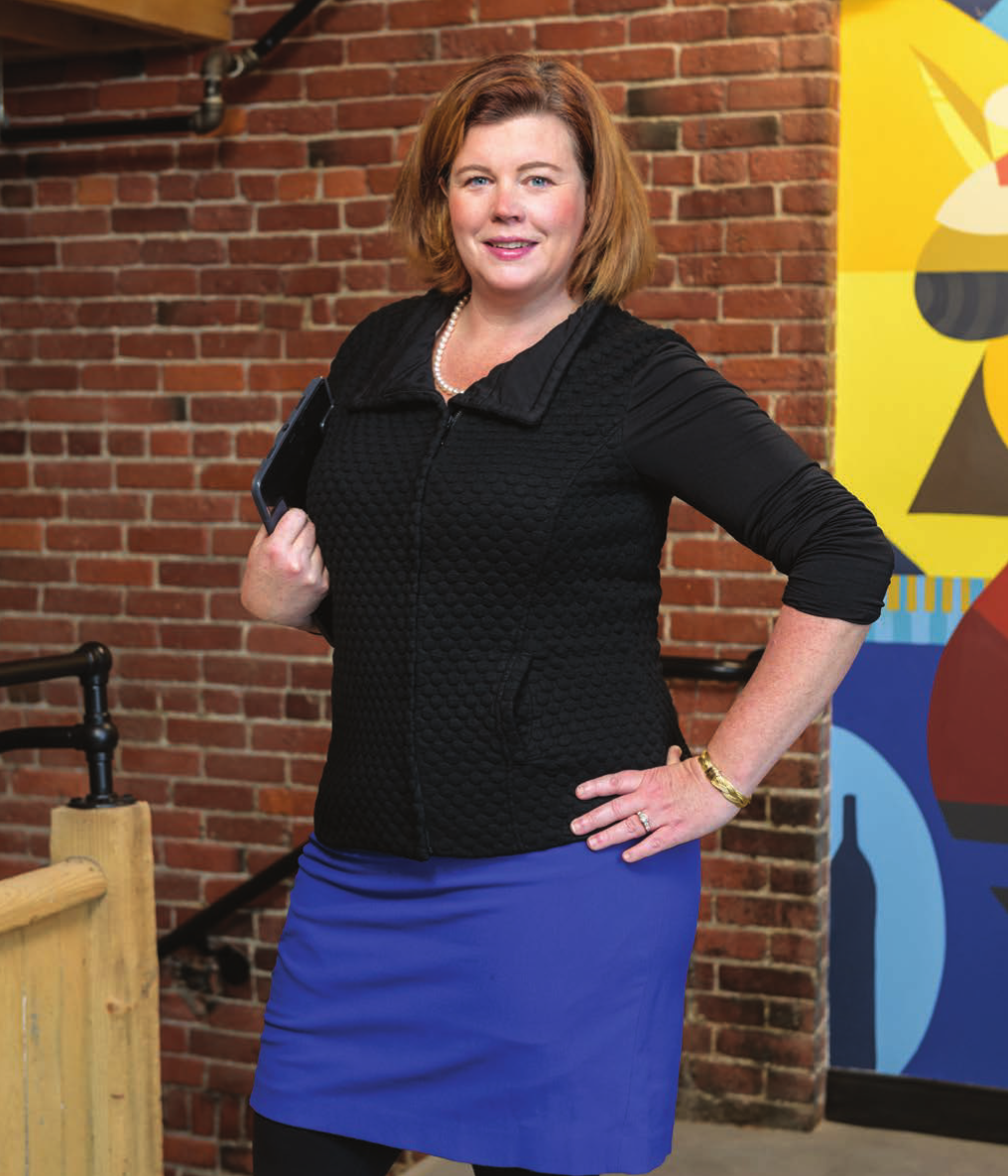
Elizabeth Cash Hitchcock
Principal, Orbit Group
Owner, Adored Wifi
Developer, Factory on Willow
Co-Founder, Minim
Owner, The Bookery
Photo by John W. Hession
For over 15 years, Hitchcock has led the New Hampshire business community as an entrepreneur, investor, small business owner and champion of the arts. She developed the Factory on Willow, a 100,000-square-foot space in Manchester for creators, innovators and entrepreneurs. She created an Artist in Residence Program at the Factory on Willow and also remains committed to making sure public art in Manchester thrives through initiatives, such as “The Riverfest Reboot” and the Manchester City Mural Project.
She also works at her family office, Orbit Group, which is mainly focused on technology startups and real estate projects. Hitchcock co-founded Minim, an internet of things (IoT) startup focused on making Wi-Fi simpler and home networks safer, and currently leads Adored, a wireless ISP, to continue to make home internet user-friendly. She is also the owner of The Bookery in Manchester, an independent bookstore and café that is an anchor to downtown Manchester retail.
Committed to strengthening New Hampshire’s startup community, she attracts additional investment dollars across several New Hampshire startup companies through her work at Write the Check, a gender-diverse leadership fund, and as the general partner of the Millworks Fund, a triple bottom-line investment fund focused on growing the New Hampshire tech ecosystem. This past year, she joined Chief, a private membership network focused on connecting and supporting women executive leaders. Her mission for all of her endeavors is to build a better community through guidance, relationships and capital.
Q. You have multiple ongoing endeavors throughout NH — how do you manage it all?
It’s indicative of an amazing team. I have the opportunity every day to work with an amazing group, and they help us manage and service all of the different businesses that we get to work with. So, some of the nitty-gritty that I don’t get involved with, the day-to-day stuff, they’re always helping making sure things are moving along.
Q. What advice would you have for women starting out in their careers or who may have an idea they want to put in motion?
I was lucky enough to be invited to a lot of different tables. When you’re invited to become a part of something, you should take that opportunity. It might seem frightening, but it is the best thing you can do because you’ll see amazing growth from that. You’ll be sharing ideas that you have with other people, and they’ll be sharing their ideas with you. And it’s amazing when you start to create that communication with many different people and all of the things that you can create.
When I was in the arts commission, there was this little old lady in a group I was pulling together of prominent creative organizations in the city. We were having really great conversation and it was definitely helping everybody, but we weren’t really doing anything. And this little old lady goes, “Liz, why are you doing this?” And I was like, “Oh, I don’t know. I just think we all need to understand what’s going on.” And she goes, “You’re not going to make a difference if you just don’t do something.”
So, just do something. It might be small in your eyes, but it could be gigantic in other people’s eyes.
Q. What current initiatives are you excited about?
Everyone is looking for an elevated technology lifestyle, and we’re getting pieces of it. There’s this entire IOT (internet of things) infrastructure that we could put in place in our homes that would make our lives so much easier, from lights turning on when you’re in proximity to doors unlocking, all of these bits and pieces that change one’s lifestyle and experiences from day to day. Adored Wifi is doing that right now. It’s all super seamless and super easy.
When I think about the total of all my work from (The Bookery) to the Factory on Willow to Minim to Adored Wifi, it’s about this experience and giving people this IOT lifestyle.
Q. What sparked your passion to enter the technology field?
I always had a computer in my household. My grandfather was a humongous part of my upbringing, and he was a computer science person who worked for the Pentagon. He helped implement bar codes across the military services, when (people) were like, what are bar codes? Now we have QR codes. And I love that Minim now has a patent for using QR codes for setup of their devices, because it kind of hearkens back to my grandfather’s days.
Q. What is a significant challenge or obstacle you’ve had to overcome?
I was the only child of a single parent, and finances weren’t always easy, food security wasn’t always easy. But whenever there were food security problems, we always went to (my grandfather’s) house and we were able to live in one of their houses.
Public education is 100 percent why I am here today.
I had an amazing education in a very upwardly mobile community. My childhood wasn’t easy, but the influence of really amazing teachers made me who I am today.
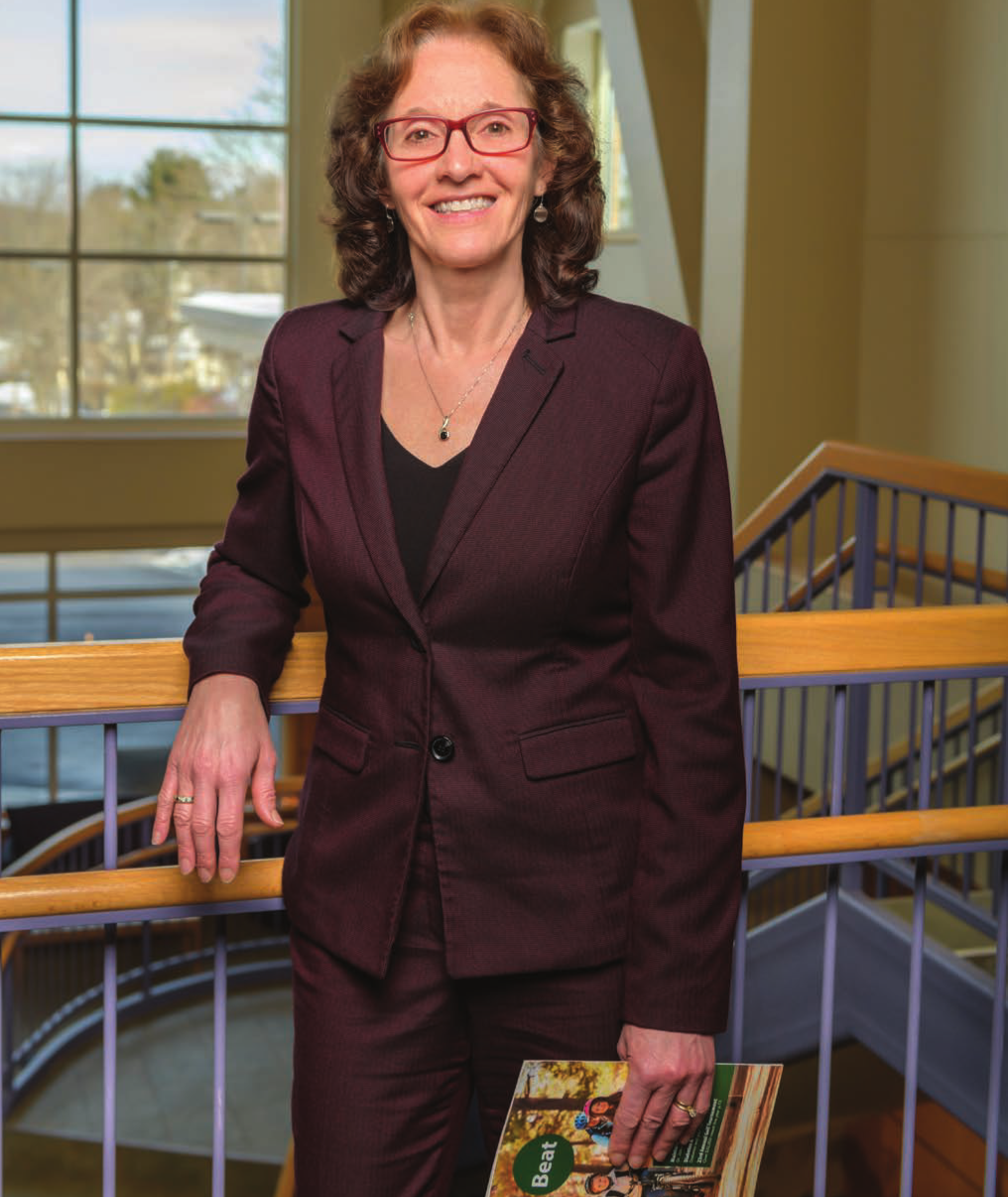
Michelle McEwen
President & CEO
Speare Memorial Hospital
McEwen has worked at Speare Memorial Hospital in Plymouth for 29 years, leading the organization for the last 21 years. During her tenure at Speare, she earned the top healthcare management credential of Fellow of the American College of Healthcare Executives from the nation’s leading professional society for healthcare leaders.
Fellow status represents the highest standard of professional development and only 5,400 healthcare leaders held this distinction at the time.
She was part of the American Heart Association Council for Small or Rural Hospitals and the AHA Regional Policy Board, where she focused on future policy issues that affected central New Hampshire. Her extraordinary leadership during the pandemic has been pivotal in mobilizing hospital employees, community members and businesses in order to keep those they serve safe.
Photo by John W. Hession
Q. As a healthcare leader for over two decades, what challenges did you encounter as a woman in a male-dominated industry?
Healthcare is a female-dominated industry when you think about the entire workforce, and, unfortunately, the leadership of these organizations does not mimic the workforce that they are leading. I am happy to say that the number of women in leadership roles in healthcare has improved, and NH has done quite well.
I think the challenges that I faced were very similar to other women in any male-dominated industry, which includes not being heard, not being taken seriously and not being valued as an equal member of leadership.
Q. What sparked your interest in working in healthcare?
I began my career in the world of finance, as a CPA for a large worldwide firm, where I was provided an opportunity to join their healthcare consulting division. I found that I enjoyed consulting work, because each engagement was a different problem to solve with playbook to follow. I found healthcare challenging. It is an industry that is highly regulated, where hospitals are required to treat anyone that walks into their emergency room, whether the patient can afford to pay for their services or not. Many other industries have much more control over their revenues than healthcare, so ensuring a healthcare organization is financially successful is challenging but also stimulating.
Q. What advice do you have for young women just starting their careers?
I would advise them to have the confidence that they can be great at whatever their endeavors may be, but also to realize that they need to work hard to get there. They can prove to others that they have the skills and knowledge necessary to advance by taking on projects that challenge them and allow them to learn and grow. They should never stop learning and take each day as a learning opportunity.
It is also important that they remain humble and reflect on their performance: How did I handle that situation or that issue? Could I have done it differently to get a better outcome? As part of reflection, they should be honest about their strengths and weaknesses and how that affects their performance. Lastly, I would encourage them to stay true to their values.
Q. What prompted you to become involved with the American Hospital Association Council for Small or Rural Hospitals and the AHA Regional Policy Board, focusing on future policy issues in NH?
It has been several years since I served, but it was a wonderful experience and one that I hope I get the chance to do again. It was a great opportunity to influence the future and to look at things from a “big picture” perspective. I was interested in participating in the process due to the unique learning opportunity it presented to me, but also the opportunity to network with other hospital CEOs outside of NH and participate in stimulating conversations about our future environment and how we could steer it in a way that was meaningful for our organizations and the communities we serve.
Q. How has the pandemic affected your dayto-day life in the hospital? What challenges/ obstacles did you have to lead your team through?
The pandemic affects us every day. The most significant challenge of the past few months is how to do more with less, to an extent that we’ve not faced before. We have experienced a significant loss of healthcare workers, in an industry that was already facing a workforce shortage.
We have also seen dramatic increases in patients in need of our services, whether due to the complications of Covid or significant health issues that arose due to delays in accessing care. Since late fall, our larger hospitals with specialty resources have been unable to accept transfers of severely ill patients from small community hospitals. We had to stop all elective surgeries, so that we could convert our surgical recovery rooms into a telemetry unit in order to admit and monitor more patients than our licensed capacity.
We have an amazing team that stepped up by filling roles different than their day-to-day responsibilities and working long hours to ensure all our patients got great care.
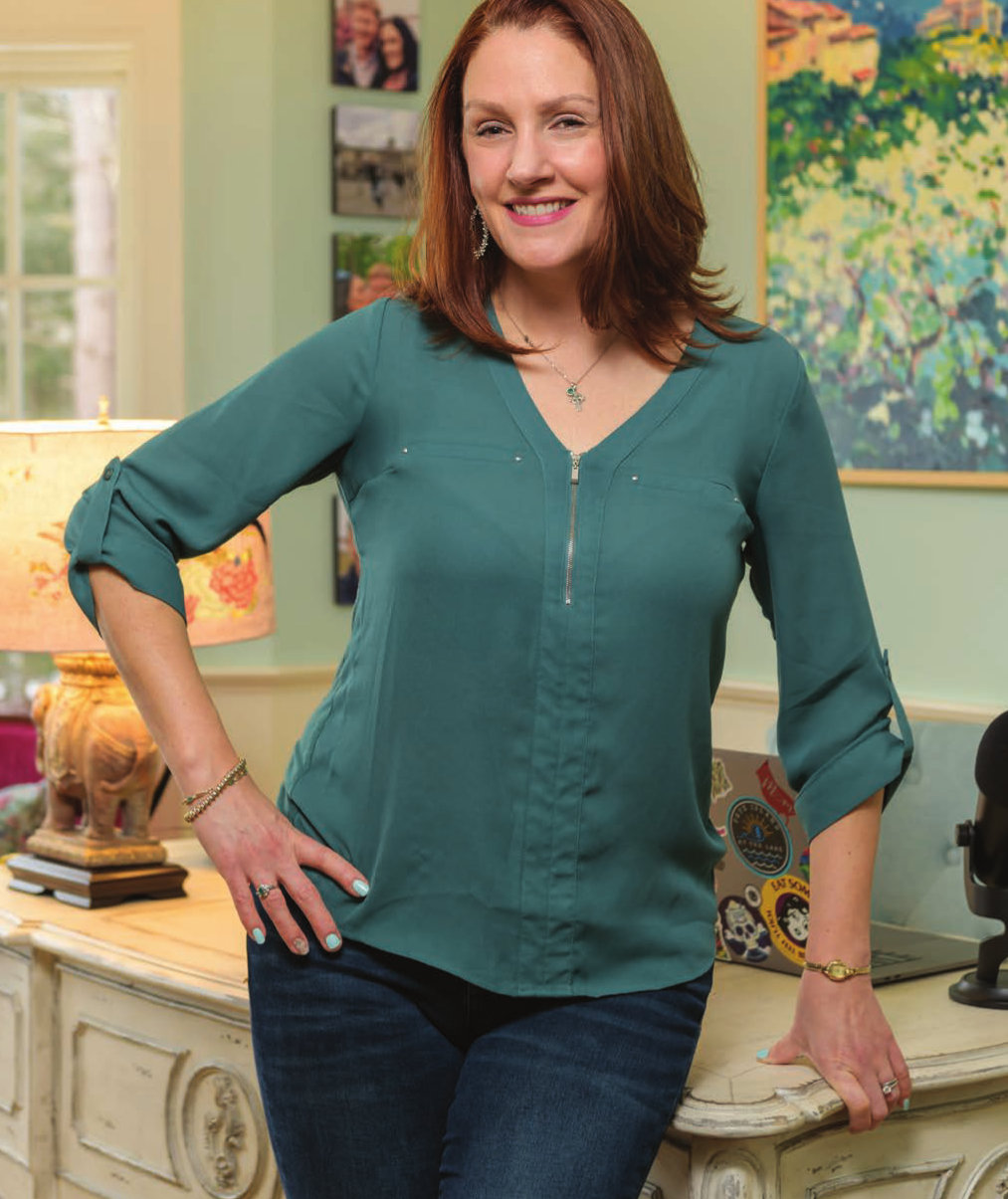
Amy Heymans
Strategic Advisor
Founder, Mad*Pow
Heymans is a co-founder of Mad*Pow, a design agency that partners with clients to improve health and helps people achieve financial well-being and have a positive social impact. Heymans also founded HXD, a health experience design conference, which draws designers, technologists, healthcare industry executives and clinicians to discuss how a collaborative process involving diverse stakeholders can help develop solutions for problems in the healthcare industry.
Additionally, Heymans created the Center for Health Experience Design (CHXD), which serves as a design and experiential innovation resource to health organizations, and a place for establishments whose mission is to improve the experience of health for everyone.
She also serves as the vice president of An Orphan’s Dream, a nonprofit dedicated to providing an orphanage for children in Kenya who have lost their parents to AIDS and domestic violence.
Photo by John W. Hession
Q. What lessons can you impart to future female business leaders?
A. Our voices have power. At times, I would rush my speech or apologize for what I was going to say. Now, I’m realizing I can take my time and speak my authentic truth no matter the audience, and do that fearlessly and unapologetically and not be worried about taking up space.
And understanding that my ideas matter and my voice has power.
We may think, I’m too sensitive or too emotional or too this or too that. For me, I thought that I had to be perfect in order to ensure that what I was doing was worthwhile and that nothing I was doing could be detracted from somehow. And that led me to being very hard on myself. It’s also about listening. We all need to be listened to and valued and held with dignity. Listening is a gift that we can give to someone else.
Q. What motivates you to create new initiatives that benefit people worldwide?
A. It’s a belief in humanity that we have the wherewithal, the creativity and the desire to make things better. I truly believe that we can overcome obstacles through creativity, through inclusion, by focusing on what matters most and what people really want and need. It’s optimism, a people-first mindset, and a commitment to co-creation and collaboration.
Q. What challenges have you encountered as a female leader in the workplace?
A. Challenges come and go. Sometimes you need to make a decision, and there’s no kind of good decision to be made. And yet, you still have to make a decision and you have to hear feedback from that. The challenge is knowing who you are and the value you bring to the table. Also, be open to other points of view and mindsets, so that you can figure out what’s going to work best. You don’t want to forget who you are and just do what everybody else says, but you don’t want to be so confident in your direction that you’re not listening to others. I think finding that balance was definitely a struggle for me, and the answers come through reflection. It’s constant growth.
Q. Have you had a mentor or served as a mentor?
A. I have served as a mentor and it’s one of my favorite things. I walk away inspired, and it also pushes me to clarify and reflect on what I know and believe.
I had some great mentors. I had my sister, who I was able to witness being the only female engineer amongst a team of engineers, and I saw how she boldly held her own. And then I had another mentor, Alexandra Drane. She was unapologetically who she is — a feisty, intelligent, bold, brave woman. I saw her in the industry speaking and then I came to know her as a friend, and she shared her learnings with me and took the time, which was generous. Whenever I had to do anything hard, I would say to myself, “Pretend you’re Alex Drane.” I would channel her in a way until I knew that, okay, I can do this.
Q. How do you balance your professional and personal lives?
A. I learned that you can’t give 100 percent to work and 100 percent to home. You have to have a life that is a puzzle of many pieces, and you sort of zoom in and out of different areas as they become relevant. A lot of it was letting my standards down in some cases, like it’s okay if the kitchen is a mess or it’s okay if I reschedule this meeting, so that I can be here for this field trip or this important moment. Flexibility and trusting your gut are really important, and also knowing that you will drop a ball at home and you will drop a ball at work and that’s okay — the world isn’t going to end. I’ve learned over the years to be patient with myself. And to know that I might not get it right the first time or the second time, or I might make a mistake, but that’s okay. I’m going to keep learning and keep going.
Sandra Almonte
Owner
Don Quijote Restaurant
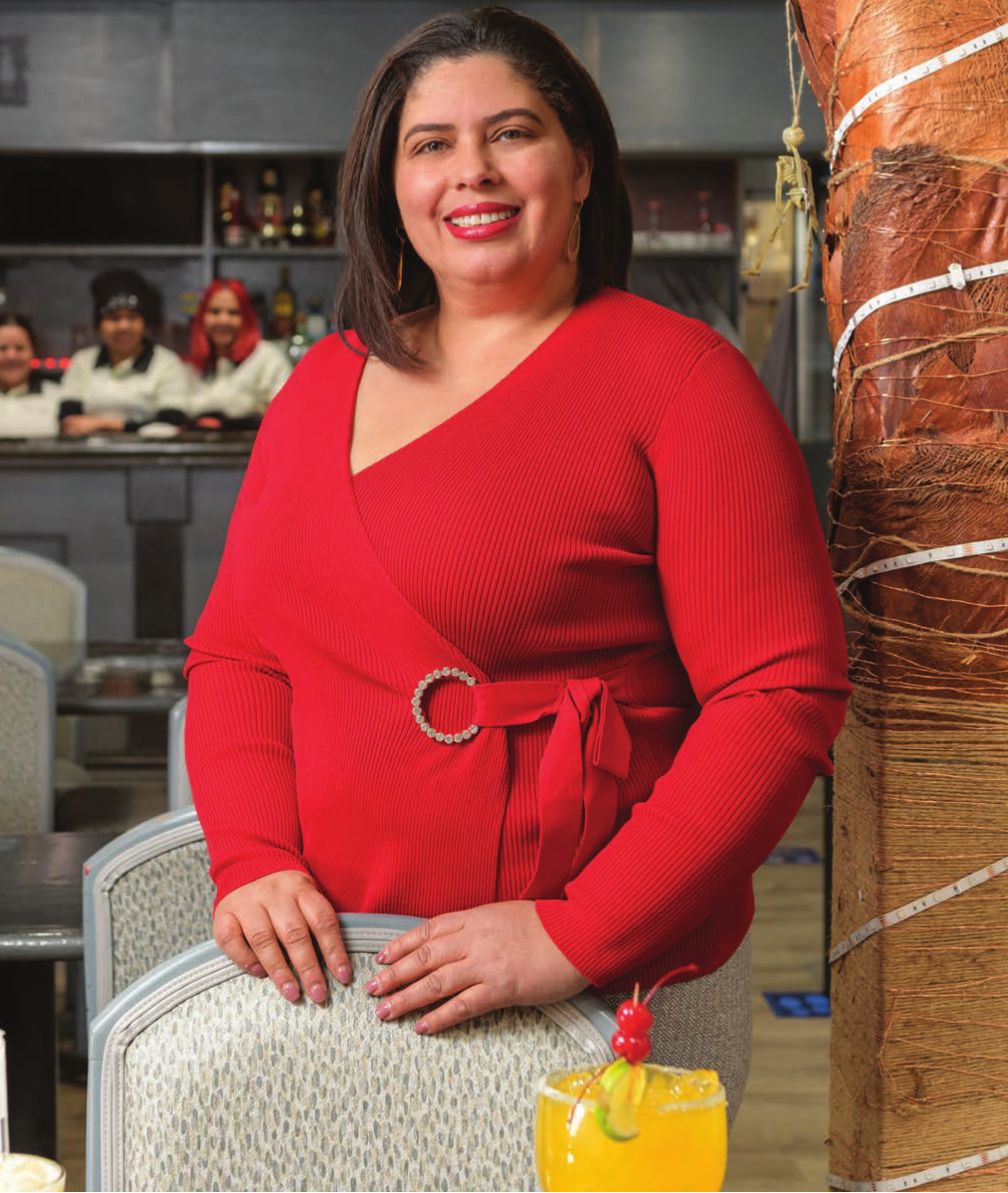
As a native of the Dominican Republic, Almonte immigrated to New Jersey at the age of 9 in 1981 and later moved in 2000 with her ex-husband and three sons to Manchester, where they opened a Latino restaurant, Don Quijote, when very few existed in New Hampshire.
In just over two decades, Almonte’s business has grown and thrived, in no small part due to her unwavering commitment to providing authentic cuisine, a welcoming atmosphere for her patrons, and a genuine concern for the well-being of her employees and community.
Almonte is chair for the board of directors of Neighbor- Works Southern New Hampshire to help create affordable rental housing in Manchester, Nashua and surrounding communities. She is also a board member for the Conservation Law Foundation and Manchester Proud, and an advisory council member for the Centro Latino de Hospitalid.
Photo by John W. Hession
Q. What lessons would you pass down to future female leaders?
Back in 2000, I noticed Manchester was a growing city, very multicultural, but there were no restaurants where Caribbean food would be offered. When we opened, I focused on getting to know the community. Our food is typically Dominican, but as the years went by, we noticed a changing clientele. It wasn’t only Dominicans; it was people from Columbia, Brazil, Guatemala, Salvador, Mexico. So, what I learned was: know your customers, know what they’re looking for. We changed some of the menu to be less Dominican and more inclusive of everybody. So, know your clientele, know what you’re serving and what they like and dislike. Make the business what you want.
Every time I have an opportunity (to stop by customers’ tables), I do it. It’s about relationship building, which is a very big part of not only my business but also some of the community work that I do. I learned some of their struggles, and I feel like, “wow, this is exactly what I went through when I was a little girl.” I resonate so much with my customers.
Q. Any community initiatives you’re excited about?
I am passionate about educating residents — not only writing but also coaching them on financial wellness, because it teaches them to fix their credit, to eventually turn them from just tenants to homeowners.
I’m also into some of the environmental justice issues that we have — like homes with lead. There are so many absentee landlords who live out of town. And then, of course, the high prices.
I also hire people from out of halfway houses who got into trouble or have mental illnesses. I feel that everybody deserves a second chance. They just don’t have any hope. I like to give them the opportunity, a stepping stone, to be social and have responsibilities. My business is a small space that’s very family oriented, and it just makes them feel safe. They mostly come up from other states, so they don’t have any close family here.
I’d love to help build another Latino center, maybe do a fundraiser someday and get a building, so we can have community help not only for the Latinos but for all immigrants. They need resources to know the city and to acclimate to the U.S. I call my restaurant a little community hub, but I’d love to have a hub for all the immigrants that come in with different resources and ESL (English as a Second Language) classes.
I know a Colombian gentleman, who was a jeweler in Colombia, and here, he’s cleaning offices. Then we have dentists, lawyers, nurses, RNs back (in their home countries) and they come here to clean toilets. I have a young girl who was a lawyer in the Dominican Republic, and she left everything and is now a waitress at my place, and I’m trying to empower her to learn the language. One of the things I do is enroll my staff members into ESL classes. I try to live by example. I want to get more community members involved. I’m trying to plant that seed.
Q. How did your family/mentors impact your career development?
My mom and dad were my first mentors. I got my first job at 13. I used to earn $35, but my mom would take $10 away from me every week. And when she reached $100, (my parents) opened my first bank account. And that paved the way for me to be a saver.
My father was expecting us to do well in school because he always said, “We’re in the United States now, so you have to work really hard to have more opportunities.” He was 38 when (my parents) bought their first house, and then he went to get his GED to be able to help us with homework.
When I moved to New Hampshire, my insurance agent became my mentor because I would ask questions about the business, like what do I do? How do I go to the next level? I always like to ask questions of those who I feel are the right people who can answer me and are people I can trust. I have a great network.
Judy Rogers
Owner
Prime Roast Coffee Co.
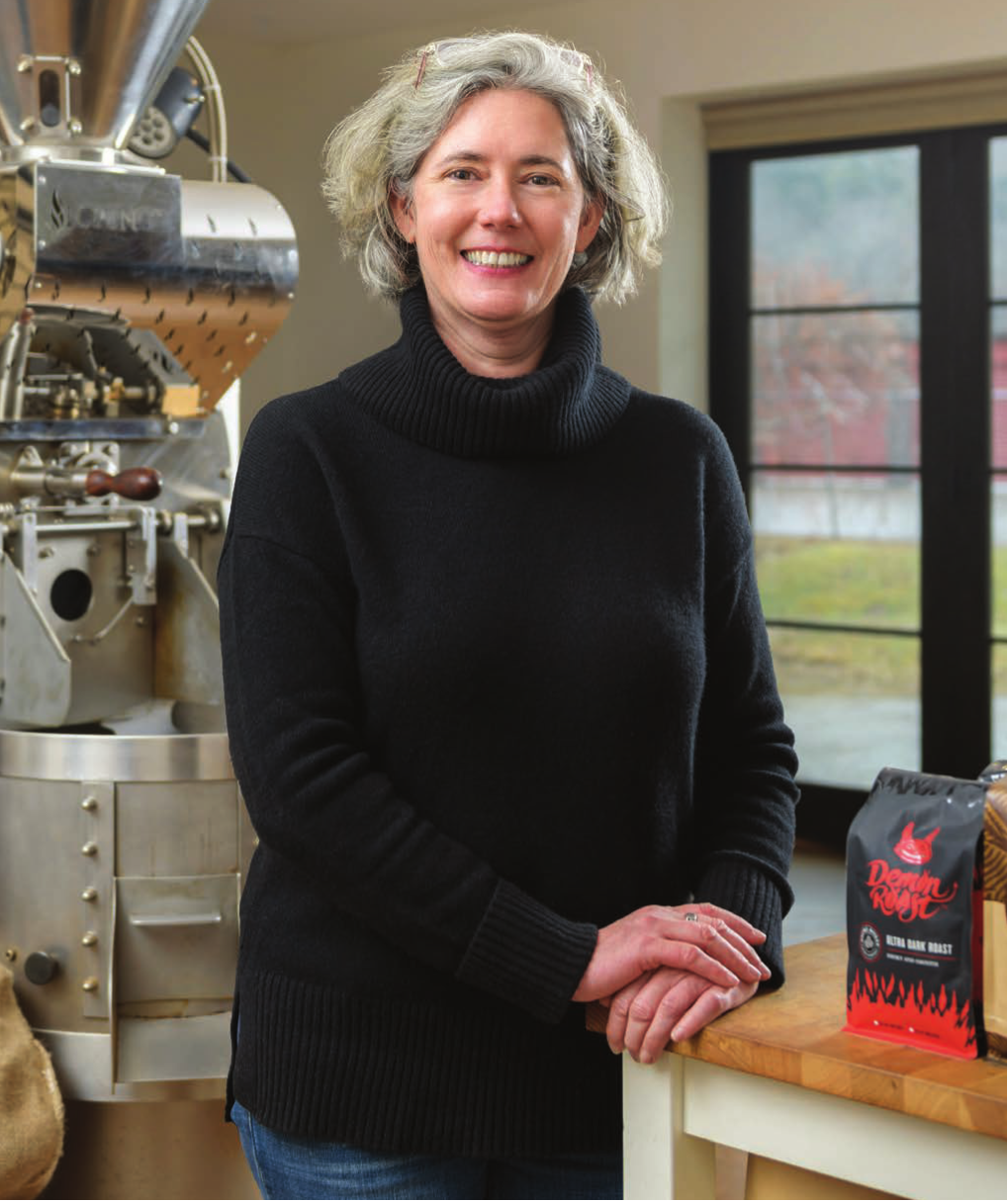
Rogers’ roots run deep in Keene, where she worked as a teenager at Imports Plus, a specialty food and cooking supply store, which she purchased at age 23. In the early 1990s, Rogers made a bold decision to roast her own coffee. She purchased her first roaster when there were fewer than a dozen small batch roasters in the Northeast, and taught herself how to maintain the machine.
Today, she owns and runs Prime Roast Coffee on Keene’s Main Street and a separate roastery on Route 101. During the four months of the pandemic lockdown and the subsequent months, maintaining a sense of community became one of Rogers’ most significant challenges to date. Prime Roast beefed up its online presence, offered curbside service and added delivery by bicycle.
Rogers’ community involvement includes service on the boards of directors for Monadnock Family Services, Center Stage Keene and the Granite State Monarchs, and service on committees for organizations such as Cities for Climate Protection city of Keene; Phoenix House; Monadnock United Way; and several others. She was also community coordinator for The Magical History Tour mural festival, a deeply personal project that transformed the face of Keene.
Photo by John W. Hession
What inspired you to start roasting your own coffee?
The store I managed right out of college sold Green Mountain Coffee as well as other products. And when I became the owner in 1988, I took over that product line and expanded it. Our business was one of their largest, at the time, wholesale customers in the New England area. It was 1991-92, Green Mountain went public; they changed their whole business model. They wanted to become as big as they are now — they set their sights really high. When I used to buy from them, they would roast to order and send it to me right out of the roaster, which is what we do now (at Prime Roast). When they went public, their whole model changed and their coffee freshness took a hit, so I decided, why can’t I do it myself? I took a course in New York City with the manufacturer of the roaster just to learn how the machine worked.
The quality of the product and the quality of the experience are important. People have asked me for years why we haven’t expanded. (Prime Roast) seemed ripe for a second, third, fourth location. And for me, I couldn’t recreate the experience that we give with this one. I don’t need to get bigger just to get bigger. I really like being the little guy. I like knowing all my customers.
What challenges did you encounter along the way?
I’ve been through two recessions. The mid 90s were really hard — most of downtown Keene was shuttered. We lost big department stores.
At the time, I ran three specialty kitchen stores in town.
What I had to push through was near-bankruptcy and trying to decide, do we keep going? Around that time, specialty retailers were starting to see a lot of competition from department stores which we had never had before. We would take all the risks on new products, and once we found something that really was a winner, places similar to Target would swoop in and sell it for less than you can.
I was almost out of business in the mid-90s and that’s when I changed the business to specialty coffee. I moved into a smaller space and started doing the coffee shop and roasting.
Do you have any mentors or mentees?
Right now, I’m mentoring a woman who has been with me for over 13 years, and we have a relationship where I want her to know everything that I know, so that she can become me when it’s time for me to retire. Over the years, my coffee family still keeps in touch. What’s nice about having 30 years of experience under your belt is that business is much easier to manage when you have a right-hand support system that can do almost everything that I do.
Other businesses will ask me questions, but (starting a business) is an individual experience. You take your personality and you make it into your brand. Hopefully, it’s a concept that people like and want to be a part of. That’s success right there. Do what you’re passionate about.
What advice do you have for young women just starting their careers?
You have to make yourself stand out from the crowd — what is something you can give that somebody else can’t give? I’ve had people come to me who wanted to franchise what I do, and I’d say, you don’t have the passion for the product or the experience. You just don’t cookie cutter that. To me, it’s never about the money. It’s nice when you can pay your bills, but do you enjoy getting up and going to work in the morning? I do. I think if you get too big to manage it, or to enjoy it, then what’s the point? I don’t see the point of more, more, more. I never have. I like going to work.
Marian McCord
Senior Vice Provost for Research, Economic
Engagement and Outreach, UNH
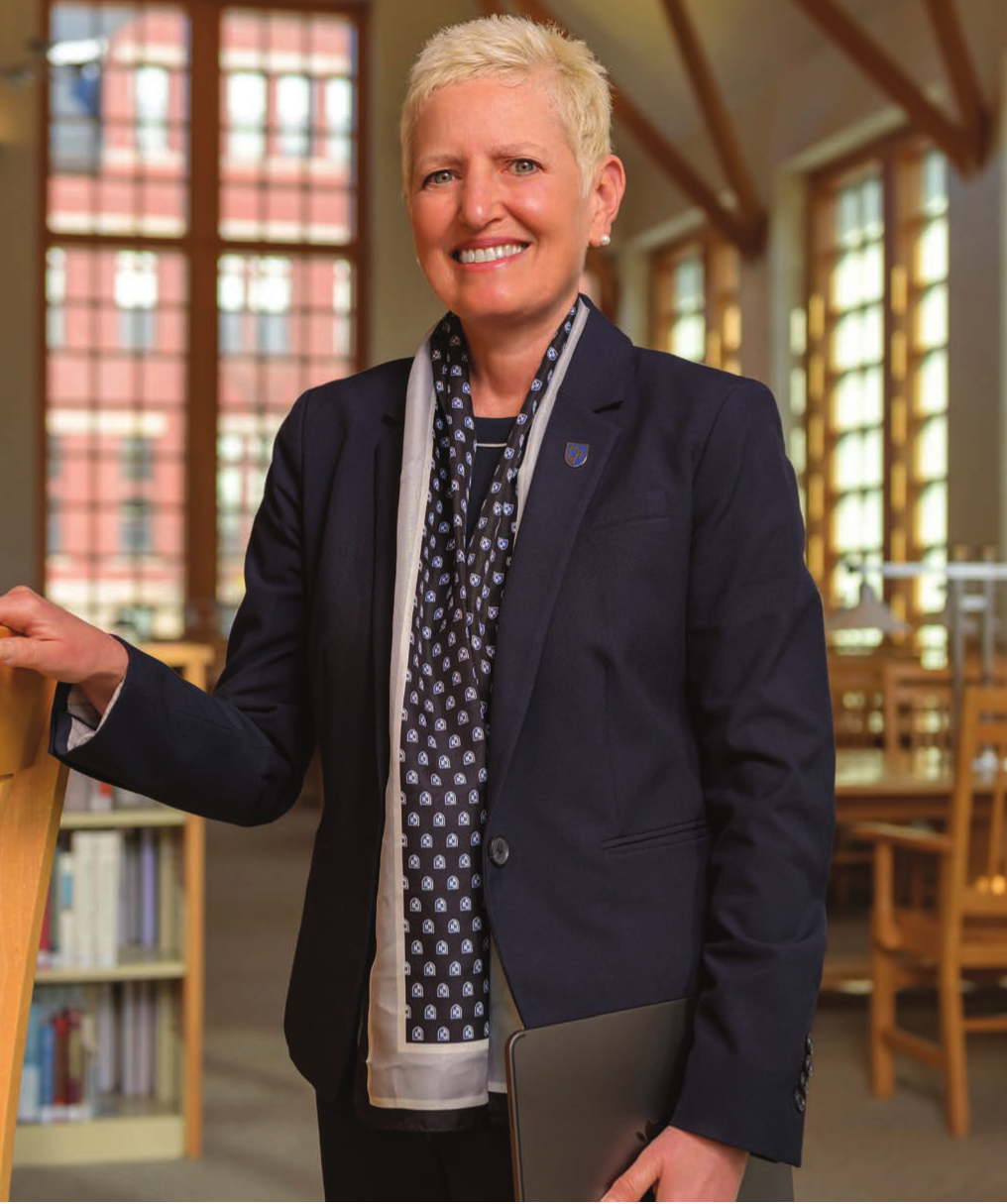
McCord arrived at UNH just as the Covid-19 pandemic was emerging as a serious threat across New Hampshire and was appointed to lead the UNH Covid Response Task Force, which directs public health efforts responsible for protecting 15,000 students, 1,100 faculty members and 2,800 staff across three campuses.
Additionally, McCord leads a research enterprise that set a historic record for competitive funding in FY21, closing the year with more than $260 million awarded to UNH in new grants and contracts — double its FY20 record. A report by the George W. Bush Institute and the Opus Faveo Innovation Development consulting firm ranked UNH the nation’s sixth most productive mid-sized university at converting research funding into direct economic impact. Mc- Cord has also led UNH to new levels of success in research support and impact. As a Carnegie R1-rated research university, UNH is in the top tier of higher education institutions for research activity — deepening and expanding research impact is essential to improving UNH’s overarching strategic goal to be among the top 25 public universities in the nation.
In August 2021, McCord was selected to serve on the National Science Foundation’s (NSF) Committee on the Future of the Established Program to Stimulate Competitive Research (EPSCoR). McCord is one of 19 national experts, selected from more than 70 nominations, to guide NSF EP- SCoR’s visioning activity by engaging with external stakeholders to better understand the impacts of its investment strategies and to identify new opportunities for increased success.
Photo by John W. Hession
Q. You have spearheaded UNH’s research support and economic impact over the past couple of years. How has your work paved the way for future business leaders?
Our unit — the Office of Research, Economic Engagement and Outreach — supports future business leaders in many ways. UNHInnovation trains students, staff and faculty in innovation, commercialization and entrepreneurship. Our research development office helps students, post-doctoral scholars, and faculty hone their skills in obtaining external grant funding. Our office of outreach and engagement provides a suite of professional development programs that are available both within UNH and to our constituents in NH and beyond, and connects UNH with K-12 students and teachers and business and economic development organizations across the state.
Q. Because you primarily work with students and young professionals in an educational setting, what advice do you normally share to drive innovation and inspire future female leaders?
I find that people tend to be most innovative when they are doing something that they love to do, so I encourage students and young professionals to take the opportunity to explore areas that they are passionate about, rather than just doing what they think they “should” be doing. I have worked with lots of high-achieving students, and have found one of the things that you need to stress again and again is that failure is an acceptable, if not necessary, part of innovation.
Women in tech face pervasive challenges and have traditionally received less support, both financial and societal, for entrepreneurial endeavors. I advise female students and professionals that they will have to be tenacious and persistent, speak up for themselves, and find good mentors and allies who can help counter some of the challenges they will face on the path to success. There is no doubt that the path for women is more difficult, especially in the tech arena.
Q. Are there any challenges to being a woman in your field?
Yes, there are challenges. Women in higher ed tend to hold the least senior administrative positions and are paid lower than men. Because women are underrepresented in tenured and full professorships, less of them make it to the highest levels of administration.
Q. What are the benefits of a formalized mentor program, and should other companies consider one?
A well-run formalized mentor program would make sure that mentoring is provided equitably and reliably. Yes, I think companies should consider these programs. However, I will say that often formal mentoring does not meet employees’ needs, and that employees should seek to grow a mentoring network both inside and outside of their organization.
Q. Any current initiatives you’re excited about?
I’m excited about everything I’m working on. Our Covid lab and the partnerships we have developed with NH DHHS to address Covid testing and identify variants has been very successful, and we hope to continue to grow our partnerships in the area of environmental surveillance and genomics.
We are working on creating a more comprehensive and coordinated approach to professional development across our campuses. We also hope to grow our Collaborative Research Excellence (CoRE) initiative, a program that supports interdisciplinary and collaborative research efforts, to include a new focus on developing shared research facilities.