A Superior Court judge put out a call in August for attorneys to help fill the gap at the New Hampshire Public Defender because the organization is currently unable to secure representation for indigent criminal defendants in Merrimack County.
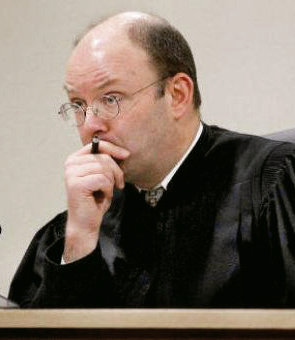
In an email to more than 20 attorneys, Superior Court Judge John C. Kissinger said the state is “facing a crisis in securing representation for indigent criminal defendants in Merrimack County.”
Merrimack County Superior Court Judge John C. Kissinger sees a ‘crisis’ in finding representation for indigent defendants.
New
Hampshire Public Defender, which was established in 1972, represents
the majority of indigent citizens facing criminal and delinquency
prosecution in New Hampshire. It is a private, nonprofit
corporation and helps to fill New Hampshire’s constitutional obligation
to provide equal justice for all under the Sixth Amendment by handling
85% of the indigent caseload.
Kissinger’s
email cited high staff departures and “overwhelming caseloads” as part
of the cause for what he referred to as an urgent need for attorneys to
take cases.
“Effective
yesterday, the Concord office of the NH Public Defender program is no
longer accepting new court-appointed cases,” the email says. “This means
that contract counsel, who take conflict cases and are already near or
beyond capacity, will be unable to fully meet the need.”
Sarah
Blodgett, director of the Judicial Council, which provides funding for
The Public Defender and coordinates various civil and criminal justice
matters, said The Public Defender has the ability to close or reduce
intake of new cases if attorney caseloads become excessive.
“With
one exception, the program has not needed to do this for more than 20
years — until now. High staff turnover and case backlogs have created a
perfect storm for indigent defense,” Blodgett said.
Continuing resignations
The high staff turnover, combined with fewer cases being heard during the pandemic, has led to stagnant caseloads, she said.
According
to Blodgett, 26 attorneys with a combined over 200 years of experience
left the Public Defender program in the 2021 fiscal year — more than
twice the normal attrition rate.
She said, “An additional six attorneys have already tendered their resignations since July 1st.
When
attorneys leave the program, their cases are split among the remaining
attorneys, exacerbating stress levels and caseloads.”
Blodgett
said the New Hampshire Public Defender has already had to close intake
at its Laconia, Dover, Orford and Nashua offices.
“During
these closures, contract attorneys and private attorneys have accepted a
huge number of court-appointed cases — much more than these systems
were designed to support,” she said. “Our indigent defense system relies
on a robust, statewide Public Defender. NHPD is widely recognized as
one of the best public defender programs in the country, and it is the
backbone of New Hampshire’s indigent defense system.”
Blodgett
said the New Hampshire Public Defender and the Judicial Council have
taken steps to address these issues by recruiting experienced criminal
defense attorneys as lateral hires, and by reaching out to the New
Hampshire Association of Criminal Defense Lawyers to request assistance
with the caseload.
“The
Judicial Council has been recruiting new private attorneys to accept
cases, but low reimbursement rates and challenging work make both of
these efforts difficult,” she said, adding that the Judicial Council has
also reached out to the Massachusetts and Vermont associations and have
added about 15 attorneys to their panels, as well as trainings for
defense attorneys who are new to NH state court criminal practice.
This article is being shared by partners in the Granite State News Collaborative. For more information, visit collaborativenh.org.