NH may reap big benefits from new federal law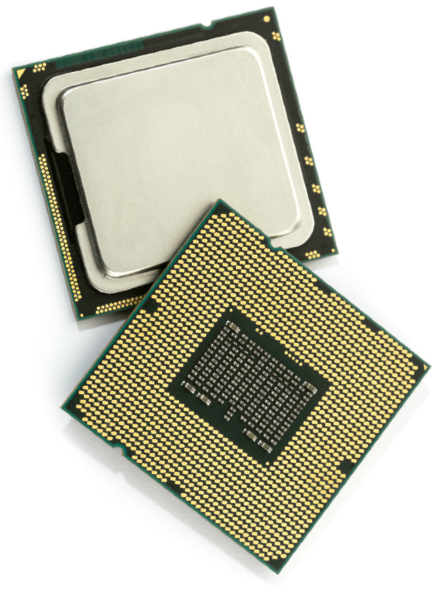
Ever since onsemi Corp. acquired the formerly bankrupt GT Advanced Technologies facility in Hudson in November, the plant has been growing silicon carbon crystals like wild in order to feed companies’ appetite for the material, which is used in the worldwide production of semiconductors, or computer chips. Because of that demand, onsemi has doubled its workforce to 185 people in Hudson, while it has ramped up production fivefold.
And thanks to the $52.2 billion CHIPS Act, which was signed into law in August, the company may be growing a whole lot more.
The act provides both carrots and sticks to chip manufacturers with the goal of bringing semiconductor production home. It’s not clear whether onsemi will have to forgo an opportunity to grow in China, where it has manufacturing, design and engineering centers, to take advantage of the act, but is considering it.
“We are definitely in the running for the funding,” said Joe Loiselle, vice president of operations and general manager at onsemi’s Hudson site. “We are really energized about this. It speaks to where the country is going. It validates what we have been doing. We are in the position to be a leader in this industry.”
The company is one of the few computer chip manufacturers with a presence in the Granite State.
But that doesn’t mean that the CHIPs Act won’t benefit New Hampshire in other ways.
First, the new law could ease the kind of supply chain issues that emerged during the pandemic, which could benefit both suppliers and customers of those chip manufacturers.
Second, semiconductors are loosely defined in the bill, leaving much up to the Department of Commerce, so more companies might be eligible for that funding than originally thought.
Third, the law is more than just about computer chips. It actually is the CHIPS and Science Act. While three-quarters of the money available will go to companies that make semiconductors, billions will go to help develop the nation’s advanced manufacturing capacity through programs that include the Manufacturing Extension Partnership in Manchester.
New Hampshire in particular can benefit because it is rural, and that might help it snag a regional hub designation. It is one of 25 states with an Established Program to Stimulate Competitive Research, or EPSCoR, centered at the University of New Hampshire, and one of 16 states with a designated Manufacturing USA innovation institution, namely the ARMI/BioFabUSA regenerative medicine initiative in Manchester. Both could get a major boost from funding, though how much remains to be seen.
Acute supply chain issues
CHIPs, which stands for Creating Helpful Incentives to Produce Semiconductors for America, is one of those congressional amalgamations of previous bills melded together to win the support of a bipartisan core of senators. Both Sen. Maggie Hassan and Sen. Jeanne Shaheen are part of that core. Hassan sponsored a forerunner bill, the Endless Frontier Act, and Shaheen, who is on the Appropriations Committee along with 1st District Congressman Chris Pappas, played a role in ushering the CHIPs Act’s passage. It easily passed the split Senate, 64-33, and the House, 243-187.
Part of the reason for this relative unity is the acute supply chain issues partly caused by a trade war with China dating back to the Trump era and the pandemic as well as China’s zero-tolerance Covid policy and its tensions with Taiwan, the world’s biggest chip supplier. Throw in a major drought, pile on more international tensions thanks to Russia’s war in Ukraine, as well as climate disasters in Europe and India and Pakistan and you have some major economic disruptions.
“When it comes to chips, you end up hoarding, and that means more cash is locked up in inventory, but what can you do? You are nervous you won’t be able to get any more,” said Gray Chynoweth, former CEO of Minim, which uses so many of those chips in building its internet of things products.
Right now, only about 12 percent of U.S. supply is produced domestically, compared to about 40 percent in 1990. Thus you have a bill that not only holds out a carrot to produce chips here, but withholds it if you continue to do business in certain other countries, currently China, Russia and North Korea.
“It’s so difficult to manufacture in the U.S., because the chips are in China. If we don’t take this step, geopolitical and climate instability is going to disrupt their supply, just when we need it the most,” Chynoweth said.
Broad applications
While $52.7 billion is contained in the CHIPS Act, it authorizes $200 billion, but that authorization will only turn into appropriation by future congressional actions, so let’s concentrate on the real money.
Some $39 billion will go toward what is commonly known as chips, or semiconductors, fabrication plants with $2 billion set aside to focus on legacy chip production to advance economic and national security interests, essential to the auto industry, the military and other critical industries.
There will also be a 25 percent tax credit for any qualified semiconductor manufacturing facility investment expenditures, including manufacturing of equipment used in such production. The secretary of commerce determines what is qualified.
Several companies contacted by NH Business Review don’t think they will see a penny of those funds.
For instance, XMA Corporation-Omni Spectra, in Manchester, makes radio frequency chips used in defense applications, not the memory semiconductors that you will find in most computers, said general manager Peter Richard, who thinks it would not be eligible for benefits.
Vishay HIRel Systems’ Dover facility makes inductors for all sorts of things and some are used in circuit boards, but not the chips itself, so operations manager David Moore also doesn’t think the company will get any money even though Hassan visited the plant on Aug. 25 to tout the CHIPS bill.
But Hassan does think the law’s applications are broader than what has been generally viewed.
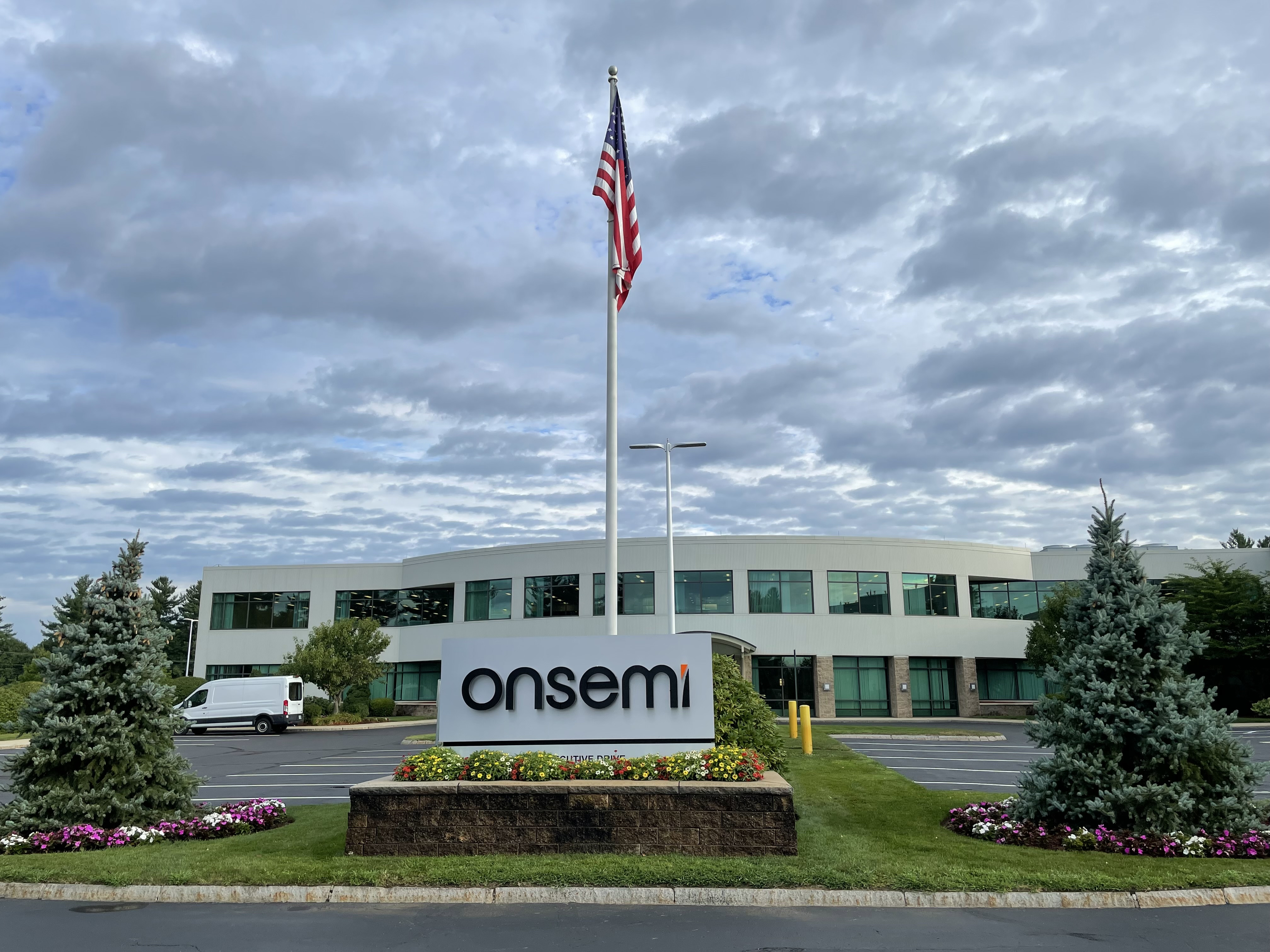
Ever since onsemi Corp. acquired the formerly bankrupt GT Advanced Technologies facility in Hudson in November, the plant has been growing silicon carbon crystals that are used in the worldwide production of semiconductors, or computer chips. (Courtesy photo)
“Semiconductors have different components, and the law gives the Commerce Department discretion to define what exactly constitutes a semiconductor, but Congress made clear that the Commerce Department should take a wide view so that we can make more of the transistors, diodes, integrated circuits and associated components that are necessary for all types of technology in the U.S.,” according to a statement from Hassan’s office.
What the Commerce Department determines will make a difference when it comes to onsemi, not just in its eligibility criteria but rules spelling out what it might have to forgo in terms of business internationally. After all, the company — whose stock is traded on the Nasdaq — posted $6.74 billion in revenue in the 2021 fiscal year.
“We are eagerly awaiting more details from the Commerce Department on the requirements and timing of the CHIPS Act process, so we can determine how to pursue the opportunities offered by the act,” said Daryl Hatano, onsemi’s vice president of government and external affairs.
Usually promulgation of such rules takes years, so it is a hopeful sign that President Biden issued an administrative order on Aug. 25, some 17 days after he signed the bill on Aug. 8, establishing a CHIPS implementation steering council and launched a website (chips.gov).
Beyond just chips
As for the rest of the CHIPS money, it would go to R&D to support the industry and develop the workforce needed by the industry.
Here we go beyond just chips. The bill sets aside about $10 billion for the Department of Commerce to set up at least 10 regional hubs of key technologies, a third of which have to be in rural areas. Hassan’s office is hoping that gives either Portsmouth or Manchester a shot.
Manchester is already a hub, of a different sort, one of the 16 set up by Manufacturing USA. And the CHIPS Act appropriates $829 million over five years for the Manufacturing USA program. That’s not much compared to $50 billion, but the program usually gets about $70 to $110 million a year. So this could more than double its annual funding.
Manufacturing USA just doesn’t fund chips development. It supports all sorts of innovative manufacturing, including biofabrication, which is what ARMI is all about.
It’s not clear how much ARMI currently gets from Manufacturing USA — a call was not returned to NH Business Review by deadline. A lot of its federal funding — $25 million in 2021 — comes from the Department of Defense, but the new law does give it the potential for a big boost.
The bill also authorizes doubling the National Science Foundation’s budget from $9 billion in 2022 to $19 billion in 2027 as well as $20 billion to fund something called a new Technology, Innovation and Partnerships Directorate to develop such capacities as quantum computing, machine learning and artificial intelligence. But this is some of the money that has been authorized and not yet appropriated.
The real change is that it would increase the aforementioned EPSCoR percentage of NFS funding from 12.5 percent to 20 percent over the next seven years. One senator estimated it could boost funding to EPSCoR states by about 1.8 billion.

But only 25 states (and three territories) are EPSCoR states, so there is potential for New Hampshire to get more then its share. Then again, it is a competitive process, so nobody knows for sure what this will mean.
EPSCoR funding goes to educational institution for research as well as workforce development, not companies, but it takes its cues from companies via a state resources and industrial council about what the industry needs, said Marian McCord, UNH senior vice provost for research, economic engagement and outreach, and EPSCoR state director.
EPSCoR, with its five staff members, is based in UNH, but there are 20 faculty members involved from UNH, Dartmouth, Keene State College, Great Bay Community College and Manchester Community College.
The Manufacturing Extension Partnership in New Hampshire also is working to develop a workforce. The bill recommends increasing to $1.5 billion to MEP’s current national budget of slightly under $1 billion, but again, that money has yet to be appropriated. Unlike EPSCoR, whatever is doled out won’t be in competitive grants. It’s generally apportioned by the amount of manufacturing activity in a state.
“We’ll be getting more money,” said state chapter president Zenagui Brahim, “but we don’t know how much.”
Whatever money does come in, Brahim would like to use some to accentuate a program that has high school kids visit manufacturing plants. It has already expanded from one day to a couple of months. He would like to have it go on all year.
In fact, beyond supply of certain parts, replenishing the labor supply is what industry could use the most, said Moore, operation managers of Vishay HIRel Systems. And while Moore doesn’t think the company will receive any direct funding from the CHIPS Act, the “effect on us would be that it enable our customer buy more Vishay parts,” he said.
Right now, he said, the company has enough trouble meeting current demand — “that is one of our biggest issues.” The company would hire 15 qualified operators right now if it could, not to mention engineers and the like, and a beefed-up workforce would go a long way in satisfying customer demand.


