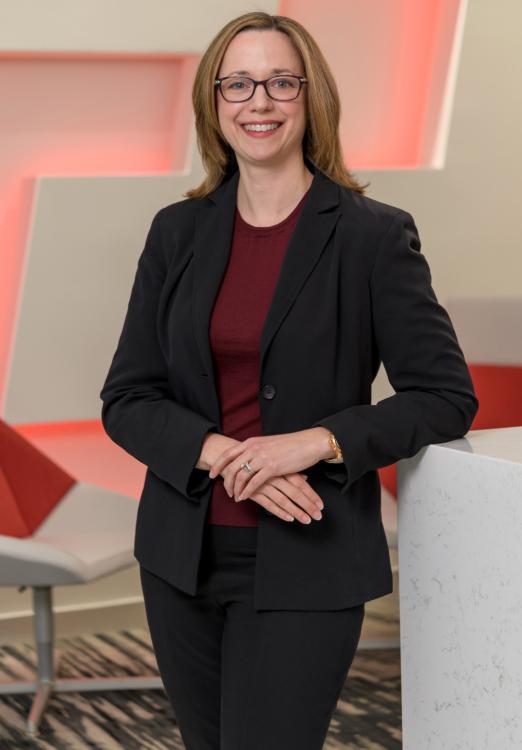
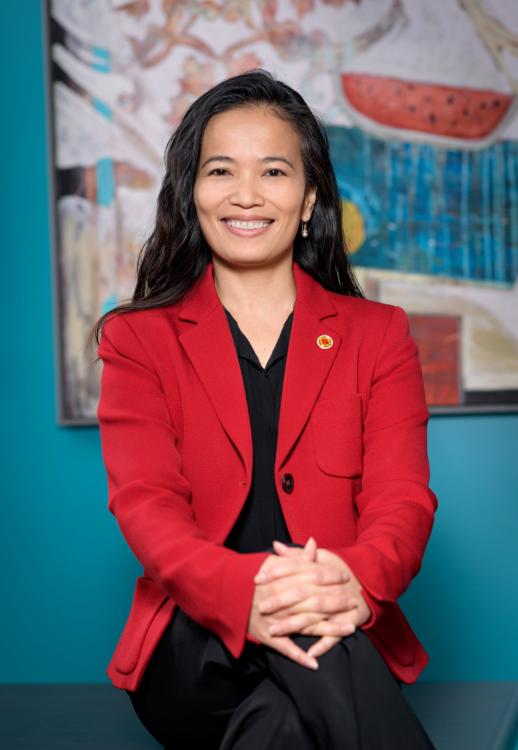
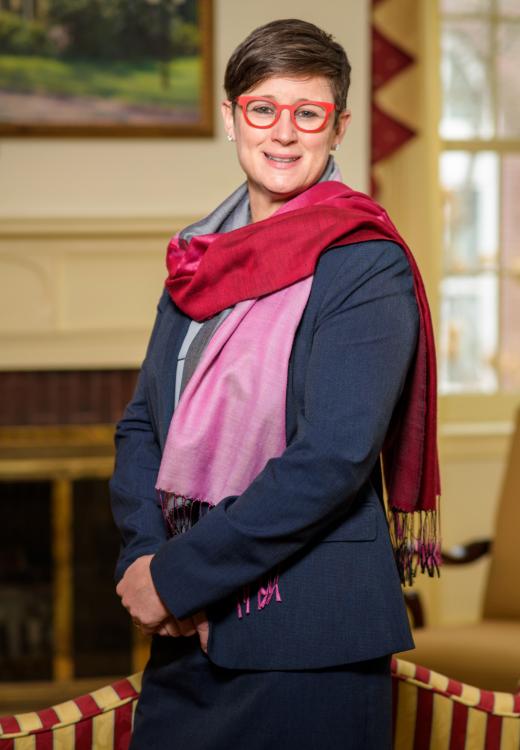
Alicia Hart
Vice President of Human Resources at Merchants Fleet
Joining the Merchants Fleet team as a human resources administrator in 2003, Alicia Hart has steadily been promoted, earning the role of vice president of human resources in January 2018.
Today, she leads a department of 12, managing operations of nearly 500 employees across 22 states, and is tasked with hiring an additional 200 employees this year.
In her 17-year tenure, Hart has transformed HR from the traditional role of solely managing benefits and payroll to strategizing with each department how to attract and develop new and existing talent, as well as work through organizational challenges.
Last March, when the Covid-19 pandemic moved most employees to work remotely, Hart developed a number of virtual engagement opportunities that allowed employees to stay connected and preserve Merchants’ award-winning culture — having earned the national distinction as a “Great Place to Work” and other company culture awards for several consecutive years.
Q. What is your leadership style?
As a leader, I try to serve my team by being collaborative, value-driven, empathetic and accountable. I am also passionate about building strong relationships. The relationships I have with others and across the business are important as they increase collaboration for my team and those that I lead. When collaboration happens, success follows. One additional lesson I’ve learned as a leader is that you need to surround yourself with great talent that will challenge you, and you have to be open to that challenge.
Q. How do you support women in a maledominated industry such as automotive?
At Merchants, we are passionate about building leaders. Three of the eight leaders that report to our CEO are women. I think that speaks volumes about our commitment to supporting women in our industry. It starts at the top! We’ve worked hard at building a culture that is inclusive for everyone and ensuring our employees have all the tools and resources to grow and develop. We have programs such as Merchants Academy, LearniQ (micro-credentials), tuition reimbursement, mentoring programs, etc. I’ve personally, thoroughly, enjoyed mentoring five women formally through our mentor program. I’ve learned so much from each of these relationships.
Q. What are the benefits of a formalized mentor program, and should other companies consider one?
Years ago, we started our own mentor program at Merchants Fleet. We pair 20 or so mentors with mentees for up to a yearlong relationship. It’s really a great extension of our programs and facilitates further relationship building and career development. It does take focus, as it’s important to provide training on what a mentor and mentee relationship is and should be. In addition, it’s important to recognize that not every pairing is going to be a perfect match. The pros far outweigh the cons. The commitment is well worth the time and effort, as I have seen many leaders flourish as a part of this program.
Q. What advice do you have for young women just starting their careers?
First, don’t wait until you have “experience” to raise your hand for a challenge. Raise your hand, say yes and learn as you go. So many people are fearful of making mistakes, when mistakes are what help us learn the most. That is when we grow the most. Second, stop saying sorry for things that are not your fault, but of course be accountable when they are. I find that women are often apologizing when 90% of the time they are apologizing for someone or something that is not in their control. Third, look for people that energize you and surround yourself with them. Positive people will fuel you and your success.
Q. How do you balance your personal and professional lives?
I think it’s important to recognize that perfect balance is not always achievable. It takes consistent focus and determination. This past year has been eye-opening for me when it comes to balance. During one of the more challenging years of my career, I made an adjustment in my schedule, so that I exercise before work. I made my health my first priority, and when I did that it changed everything.
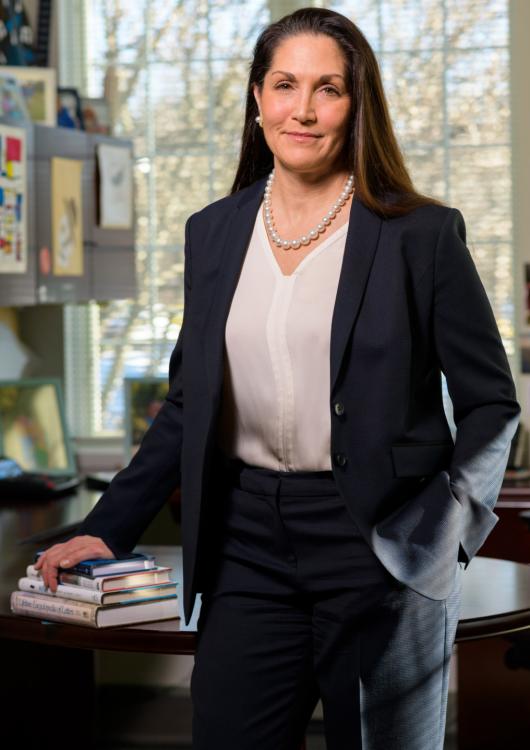
Cheryl Coletti-Lawson
Photo by John W. Hession
Chief Operating Officer of The Lawson Group
With more than 25 years of operational expertise, Cheryl Coletti-Lawson was the appropriate person to step into The Lawson Group in 2017, when the company was in need of reorganization.
Based in Concord, The Lawson Group is a health and safety consultancy that manages workers’ compensation programs for more than 300 New Hampshire companies employing nearly 20,000 workers.
Coletti-Lawson came with a background in proper operational controls and administrative and reporting procedures to ensure operational efficiency and financial strength.
She had previously steered the nonprofit HOPE for NH Recovery to financial sustainability and developed an infrastructure of recovery support service professionals. At Casella Waste Systems, Coletti-Lawson had risen through the ranks, achieving the role of regional market manager in 2009, after selling Casella her own company, Atlantic Waste Systems, in 1998.
Bringing this knowledge base to The Lawson Group, Coletti-Lawson earned the respect of her colleagues as she engaged energetically with them to determine positions better suited for their skills, increase accountability and implement a responsible budgeting system. She also implemented a leadership development program that has strengthened The Lawson Group’s internal management team, most of whom are woman.
The result is a more focused business with improved profits and happier employees.
Q. What have you learned about managing effectively?
It has been my experience over the past 25-plus years that effective leadership begins with empathy followed by accountability. Your ability to understand and share feelings for another is a critical step in effective communication and results in your staff feeling heard and appreciated. That is not to say I agree with everyone’s opinion and suggestion — nor is it to say I let people miss deadlines and fail expectations — it is simply a way to be human and connect on a deeper level with your team. Accountability is very important as well. It has been said that freedom without boundaries results in chaos. Holding people accountable while at the same time giving them the freedom to think and act has proven quite effective.
Q. Have you had a mentor or served as a mentor?
My paternal grandmother was my greatest mentor. She was strong, resilient and self-sufficient. She survived in the face of adversity throughout her entire life.
Professionally, I served as a mentor in the fall of 2019 in the UNH Meaning of Entrepreneurship program. Besides this organized effort, I suppose I can say that I hope I have served as a mentor to many young women through my own example of hard work, fair play and judgement.
Being a mentor is to be a trusted advisor. I always interact with employees and colleagues with the highest level of honesty and integrity. Not knowing an answer does not make you weak or incompetent — it shows that you are human and need others to be effective. Displaying that level of vulnerability allows for a deeper connection with others.
Our organization employs 38 employees, 75% of them are women. Even in today’s professional environment, fewer women than men hold senior-level positions. I can demonstrate through collaboration, dedication and compromise that women can succeed.
Q. How do you balance your personal and professional lives?
Ha! Balance is a word that simply does not exist. For me, the best way to be “in balance” is to prioritize. My family is the most important thing in my life. Everyone around me knows they come first. Having this commitment to them allows me to enjoy everything motherhood offers, while at the same time allows me to create a culture here at our company where employees can do the same.
Q. What advice do you have for young women just starting their careers?
It’s quite simple: work hard, always listen. God gave you two ears and one mouth for a reason. Continue to be open to learning new things. Be kind, be honest and true to yourself. Treat others the way you want to be treated. Above all, have respect for yourself and for others.
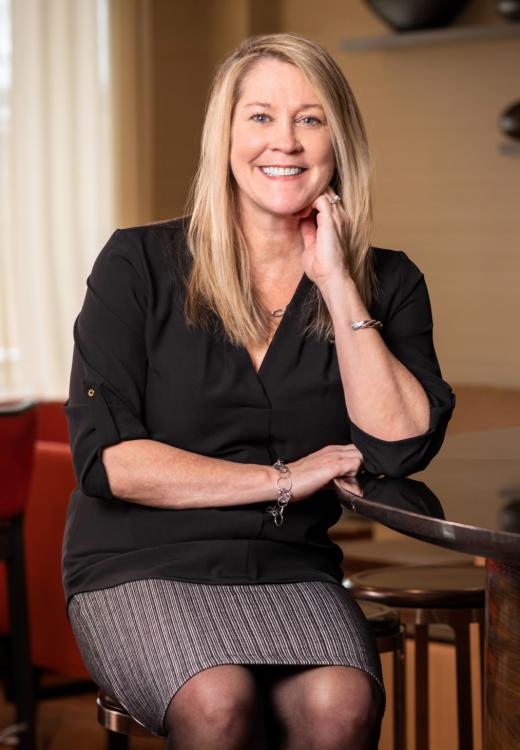
Pamela Bissonnette
Photo by John W. Hession
Chief Operating Officer of Duprey Hospitality
Pam Bissonnette has been with the Duprey Companies since September 2000 — first as the director of sales for the Grappone Center, then rising through the organization to become the chief operating officer of Duprey Hospitality, overseeing the Grappone Conference Center and five hotels (Courtyard by Marriott, The Comfort Inn, The Fairfield Inn & Suites, The Residence Inn and Tru by Hilton).
Whether she’s opening, closing or renovating a hotel, Bissonnette successfully manages whatever business venture lies ahead in an extremely organized manner.
She thrives on watching the projects come to life and celebrates with her team that is responsible for “making it happen” under her leadership.
It’s no surprise then that Bissonnette has gained the trust and respect of the president and owner, Steve Duprey, becoming one of his closest advisors.
She is a noteworthy individual in New Hampshire’s hospitality industry and through her volunteer work, including Dress for Success.
As a board member of the New Hampshire Travel Council and New Hampshire Lodging & Restaurant Association, Bissonnette is known for her can-do positive energy that she brings to every effort.
Q. You’re known for multitasking under pressure. Can you share any tips?
I often start the day prioritizing the tasks ahead. Setting priorities is the best predictor of my success, knowing what needs attention versus what can wait. By focusing on the most demanding tasks first, I tend to not lose focus on the goals or challenges. The other important quality of multitasking is accepting your limits and knowing when to ask for help or delegate. It took me a long time to realize that delegating doesn’t mean you are incapable of carrying out a task. Quite the contrary, it means you know yourself well, your capabilities and boundaries, and when you need to share the workload.
Q. What is your leadership style?
I believe great leaders inspire their associates by genuinely connecting to them through a consistent presence and visibility. My leadership style definitely involves a hands-on approach. I have worked in all departments at our hotels and understand the challenges that each position has. I am willing to assist at the properties whenever needed and hopefully have instilled a sense of teamwork and support for our associates. I think when leaders develop mutual respect, associates are more likely to work harder and feel valued. I try to set the example for others to follow by being accountable to the same values and standards I expect.
Q. You’re involved in community organizations and encourage your staff to be as well. What are the benefits of getting involved in the community?
This is a rewarding part of the job. Being involved in all aspects of different community organizations, boards and the hospitality industry, has allowed for great networking opportunities, continued learning and sense of contributing to something important.
Q. Have you experienced discrimination because of your gender?
I have not felt discrimination due to gender, however I have felt less valued or respected at times. In the renovation and construction of properties, I do my best to research the project ahead, be prepared and have confidence in my own abilities. I am happy to see more women in leadership roles in hospitality, but we are a far cry from where I hope we can be in terms of representation.
Q. What advice do you have for young women just starting their careers?
1. Don’t be afraid to fail. Failure is an inevitable part of success, from which we learn.
2. Embrace the most challenging situations as they are always opportunities for growth.
3. Keep learning. The key to growth, innovation and success is knowledge.
4. Reduce negative influences. You will meet a lot of doubters along the way — avoid people that don’t inspire or encourage you.
5. Be confident, know your worth. Don’t underestimate your potential.
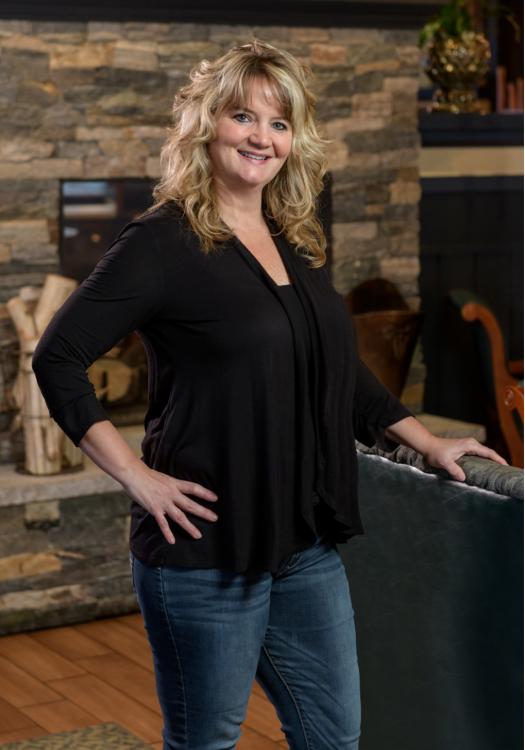
Lisa Allen
Photo by John W. Hession
Chief Administrative Officer of Great NH Restaurants
Within six months, Lisa Allen progressed from food server to bartender and then assistant manager of T-BONES restaurant in Bedford. Upon graduating from UNH Manchester, she wrote a five-page letter to Great NH Restaurants CEO Tom Boucher about her observations and ideas to grow the business.
That’s how Lisa was offered a starting position in the home office for two hours per week in neighborhood marketing. Within one year, she had earned herself a full-time office position, handling payroll, marketing and assisting the company’s accountant.
These events occurred more than 20 years ago, but they’re illustrative of Lisa’s personal investment in every aspect of the Great NH Restaurants organization, where she now oversees all administrative operations (for up to 600 employees at one time), and has been an owner and member of the executive team for a decade.
Q. What is your leadership style?
I am blessed to be surrounded by some of the greatest minds in our industry, not only in the partners I have on the Executive Leadership Team, but also in the restaurants, and especially those I work with daily in our corporate office. I would say my leadership style is to lead from my heart and teach from my mind. What I strive for in my leadership style actually aligns with several of our core values as a company.
Trust and Entrust: I trust each team member tremendously to do their jobs and do them well, and I make sure that I am behaving in a way that they, too, can trust me.
Respect: You will only get back what you put out. Care and Understanding: I believe wholeheartedly that what makes our company so great is its people. When your greatest commodity is people, you always have to remember that the person matters more than the task at hand.
We can generally, and pretty easily, fix mistakes we make in marketing, payroll, communication and accounting, but when you make a mistake in how you care, or don’t care for another human being, that may take years to repair, if ever.
Executing Greatness: I always say whatever you’re putting out there, pretend it has your name written in bold letters across it … before you send it out, ask yourself, is this my best work, and would I be OK with everyone knowing it came from me?
Q. Do you have a mentor?
I have many mentors! Most would not even know they are a mentor to me in that I am a people watcher, and I try to absorb and learn from the best qualities in everyone.
With that said, in an opportunity like this, I have to mention my Mom and Dad, who always worked so hard and have showed me to keep pushing forward no matter the circumstance; my husband, who is so well-loved by many, always lifts me up and makes me want to be a better person; and Tom Boucher, our CEO, who has always listened to me with respect, and helped me recognize over the years that my voice and opinion have value.
Q. What is a particular challenge you’ve overcome, and how did you navigate it?
With 2020 in the rearview mirror, the challenges of the coronavirus pandemic are the freshest in my mind. This pandemic has challenged me in every way: professionally, personally, physically, mentally, emotionally, and yet from it, I sit feeling great pride and tremendous gratitude.
Professionally, the restaurant industry has no doubt been one of the hardest hit industries, but what has come of our struggles has been amazing insight into just how valuable our teamwork is, how having such incredible longevity allows for greater trust in times of fear, how courage and innovation allow for continued growth and development even in the most unsure of times. I am so proud of our team(s).
Personally, I have had to become a teacher, a doctor, a therapist, on top of being a mom and wife, all while experiencing the highest level of stress I have ever had professionally. I took control of what has sometimes felt like an emotional spiral downwards for me by leaning on my husband and the strength of our relationship more than I ever have; leaning on my faith; keeping my family close both physically and in heart; leaning on my natural instinct to always move forward; journaling; maintaining friendships as much as possible; taking control of my physical and emotional health with better eating, exercise and sleeping habits; honesty about my needed boundaries; and less social media. I am a better employee, leader, mom, wife, human being for the challenges that 2020 presented me.
Pawn Nitichan
Photo by John W. Hession
Executive Director of City Year New Hampshire
Pawn is a tireless advocate for education equity and empowering young people to serve their communities.
She is a founding member of City Year New Hampshire, an education-focused volunteer service organization founded on the Seacoast 20 years ago.
It was 10 years ago, under Pawn’s direction, City Year New Hampshire uprooted to Manchester where schools have the highest dropout rates.
She has worked closely with local elected officials, business leaders, the superintendent, school administrators and the mayor, to demonstrate the value of placing near-peer City Year AmeriCorps members in Manchester schools.
The organization started with a small team of 20 AmeriCorps members and six staff members. During the pandemic, the organization has grown to 60 AmeriCorps members and 14 staff members serving in six schools (5 elementary and 1 middle school) across the district, through a combination of in-person and virtual service.
Pawn was also one of the founding members of Manchester Proud, an initiative that aims to unite the community in building a stronger Manchester by improving the schools. Pawn advocated for the inclusion of students of color and the families to ensure they were being heard.
Thanks to Pawn’s relentless dedication, City Year New Hampshire has tripled its service capacity and is having a real impact on students’ lives.
Q. What sparked your interest in the work of equitable education?
From early childhood, I had a deep sense of the importance of justice and fairness from my father, who worked in the justice system in Thailand. He also dedicated himself to making law more accessible to all through his magazine columns. Both of my parents valued education highly for me and my siblings. It was very clear to me even before I moved to the USA, how education can make such a big difference in people’s lives. It also seems fundamental to justice that those who are worst off should receive the most support and opportunities.
From the very first time I learned about City Year, I was struck by its vision and its model of harnessing the strength and idealism of young people to bring greater support and opportunities to people and communities; and when City Year narrowed its focus to educational equity, that was even more exciting to me.
Q. How does City Year New Hampshire impact education delivery?
City Year’s vision is that, alongside our partners, we will advance educational equity, ensuring that all children are provided the opportunity to succeed in school and in life. Research shows that providing students with positive, caring, adult relationships, individualized academic support and opportunities to develop social-emotional skills (like self-management, optimistic thinking and decision-making) can keep students on track to high school graduation and success in college and careers.
City Year recruits a diverse group of young-adult AmeriCorps members to serve in schools full time as student success coaches. These City Year AmeriCorps members form positive developmental relationships with their students, enabling them to deliver integrated academic and socialemotional support to students who need them most.
Q. You’re known as a bridge builder. What approach have you taken to successfully earn the financial support and involvement of businesses as well as community and government stakeholders?
I truly believe our greatest success as individuals, organizations and communities depends on our collective common desire to create a more just and prosperous society. Our ability to collaborate, find common ground and put ourselves in other people’s shoes, is key to realizing that common vision. My approach is believing that I have something in common with everyone I come across, that everyone has an ability to contribute, and that we can all be winners together when we find pathways to collaborate. Seeking first to understand, rather than making assumptions, has also been my approach in working and collaborating with others. Secondly, it is certainly important to having a proven track record of substantial impact. Solid track records help open doors. It is a must to be passionate about the work. I am.
Dr. Melinda Treadwell
Photo by John W. Hession
President of Keene State College
Growing up in Central Maine, Dr. Melinda Treadwell was the first in her family and among the few in her graduating class to go to college.
She chose Keene State College, graduating in 1990 with a major in industrial safety and a minor in chemistry. Treadwell went on to earn a Ph.D. in pharmacology and toxicology from Dartmouth Medical School and work as a corporate toxicologist for Lockheed Martin and as an environmental policy expert.
In 2012, she shifted to a career in academics, serving as Keene State’s interim provost and then vice president of academic affairs and provost and CEO of Antioch University New England.
In 2017, Dr. Treadwell returned to Keene State College as interim president and thereafter was named president.
Dr. Treadwell has approached the pandemic by applying methodical processes and precautions to limit viral spread among students and by extension the community, including weekly testing of students and staff, which she extended to the City of Keene’s staff.
Her actions have allowed more than 25,000 students in the University System of New Hampshire to return to in-person learning on campus and have some sense of normalcy during a pivotal time in their development.
Q. How did your background prepare you for taking the lead on the University System’s Covid response plan?
This was an outstanding demonstration of team effort.
Chief Paul Dean (UNH co-lead) and I had the joy of working with talented leaders, scientists, legal advisors, emergency and public health professionals from across our university system and state. I am proud of the work of our committee accomplished and the effort of literally hundreds of individuals across the system to bring our risk mitigation plans to life.
I imagine that my policy and emergency preparedness experience helped me to hold steady, recognizing that there were no zero-risk options. Our responsibility was to quantify and mitigate the known risks. We structured plans always focused on preserving the health and well-being of our campus communities and the citizens of the cities and towns we share.
My style is to listen, adapt and facilitate others bringing energy and ideas. We collaborated openly, challenged one another, and developed consistent commitments to one another and to our communities. Our Board of Trustees consulted with the team, asked challenging questions and supported campus leaders throughout the process. Honestly, one of the most challenging and rewarding experiences of my career.
Q. Why are community relationships important for colleges, and what has prompted your success in building this greater system around Keene State?
As the president of a public institution of higher education, I believe our core mission is to support the needs of the community we share — that we are “stewards of place.” I also believe that colleges and universities can accomplish much more by listening to business leaders, municipal leaders and not for profit partners to meet the needs of the future workforce and community. We can leverage one another, co-create opportunities and programs, and share resources to create better opportunities at lower cost.
I also have been excited to be engaged with our partners in the K-12 schools and our Community College System, creating new pathways that accelerate study and help students move more easily into the workforce with post-secondary credentials.
Q. What advice do you have for young women just starting their careers?
Believe in yourself, listen to others, form relationships and ask for advice from individuals around you that you respect and admire. As you progress in your career, always believe that you are an essential force in your organization. Women build community very effectively, and we see problems differently than our male colleagues. Together we can solve the most complex issues of our day and make profound change for tomorrow. Also, if you don’t feel joy in your work, take a risk and make a change. Those moments of reflection and change are profoundly important.