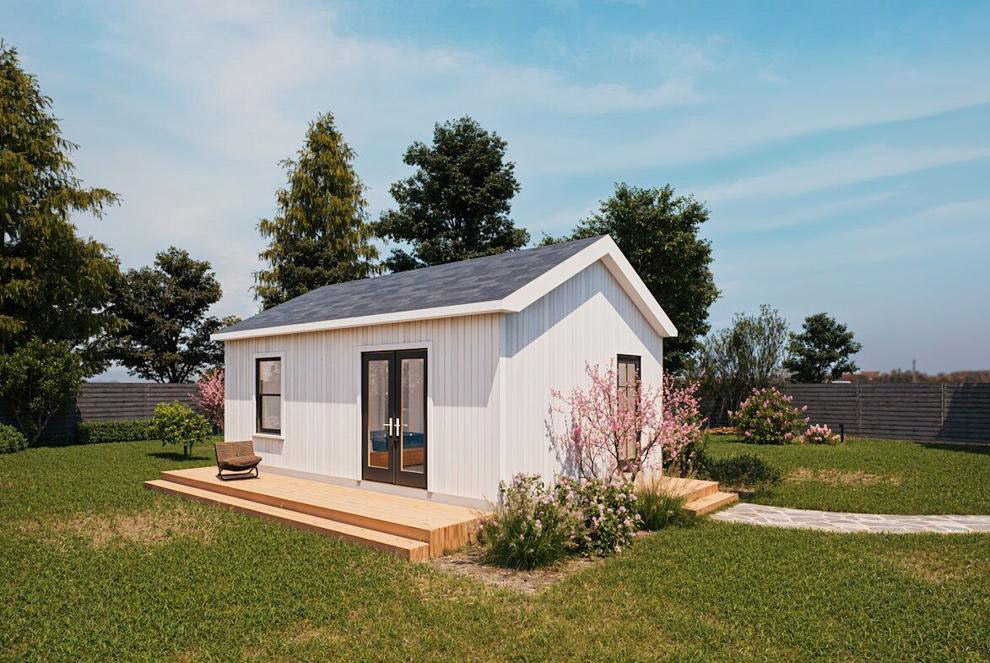
The Sunapee 384: A cozy, 384-square-foot studio designed for simplicity and comfort is among the many models offered by Kinstruct Tiny Homes. (Courtesy of Kinstruct Tiny Homes)Unable to afford the cost of an assisted living facility or a smaller home for her aging mother-in-law, Jess Stevenson and her husband built a detached tiny home on their property for her to live in.
She’d been living with the family for 10 years, but with their kids getting older, the Stevensons started to run out of space. What worked for their family they thought could work for other families, too.
“We realized she needed a better, long-term aging solution and an ADU (accessory dwelling unit) was the answer for our family,” Stevenson said. “We thought there might be other families in the same position.”
With her background in real estate and her husband’s background in construction management, they came up with the idea for Kinstruct Tiny Homes, an ADU-specific builder dedicated to making the most of single-family lots with the construction of attached and detached tiny homes. The business opened in 2023.
“The housing market is so difficult right now and this is just such a good solution for family members trying to break into the housing market and/or are looking for aging-in-place solutions,” Stevenson said.
Most of the dwellings don’t exceed 1,000 square feet and the construction often costs property owners between $170,000 and $350,000, which is much more affordable than the average cost of a starter home or long-term placement in an assisted living facility, she continued.
And with the recent passing of House Bill 577, towns are now required by state law to allow homeowners to build both attached and detached accessory dwelling units by right without needing to go before local government for approval.
“We are active in the political realm in terms of helping to navigate and figure out bills like this to make building easier,” Stevenson said. “We let the state know what we were seeing and what our families needed, real-life families, not make-believe data that’s on paper that someone did a survey on.”
Not only does this type of housing give families the flexibility to choose what they want for themselves, their family members or future tenants, it eases the financial burden, too, Stevenson said. By having family members and tenants living in ADU’s on the same property, homeowners can save money on utilities, mortgage costs and even child care.
“Each property and each family’s needs and wants are gonna be different, and we work with the families to determine where they want (the ADU), how they want it to look and what is the path of least resistance,” Stevenson said. “We have the ability to customize it and put it wherever they want.”
Occasionally, the Stevensons are hired to complete projects that aren’t related to housing. Recently, they finished building a pottery studio for a local Sandown woman.
“It’s just so fun to see these families realize those dreams for themselves when they figure out that this solution is gonna check all of their boxes,” Stevenson said.
“They find us, and we work together to bring their vision to life.”
In five years’ time, Stevenson thinks that ADUs will be the solution for the ongoing housing crisis in the state, she said.
“It’s so practical and whether you use it for family or rental income, it just meets so many different needs and wants,” she said.
This article is being shared by partners in the Granite State News Collaborative. For more information, visit collaborativenh.org.