Sarah Davis
VP of Market Development
Consolidated Communications
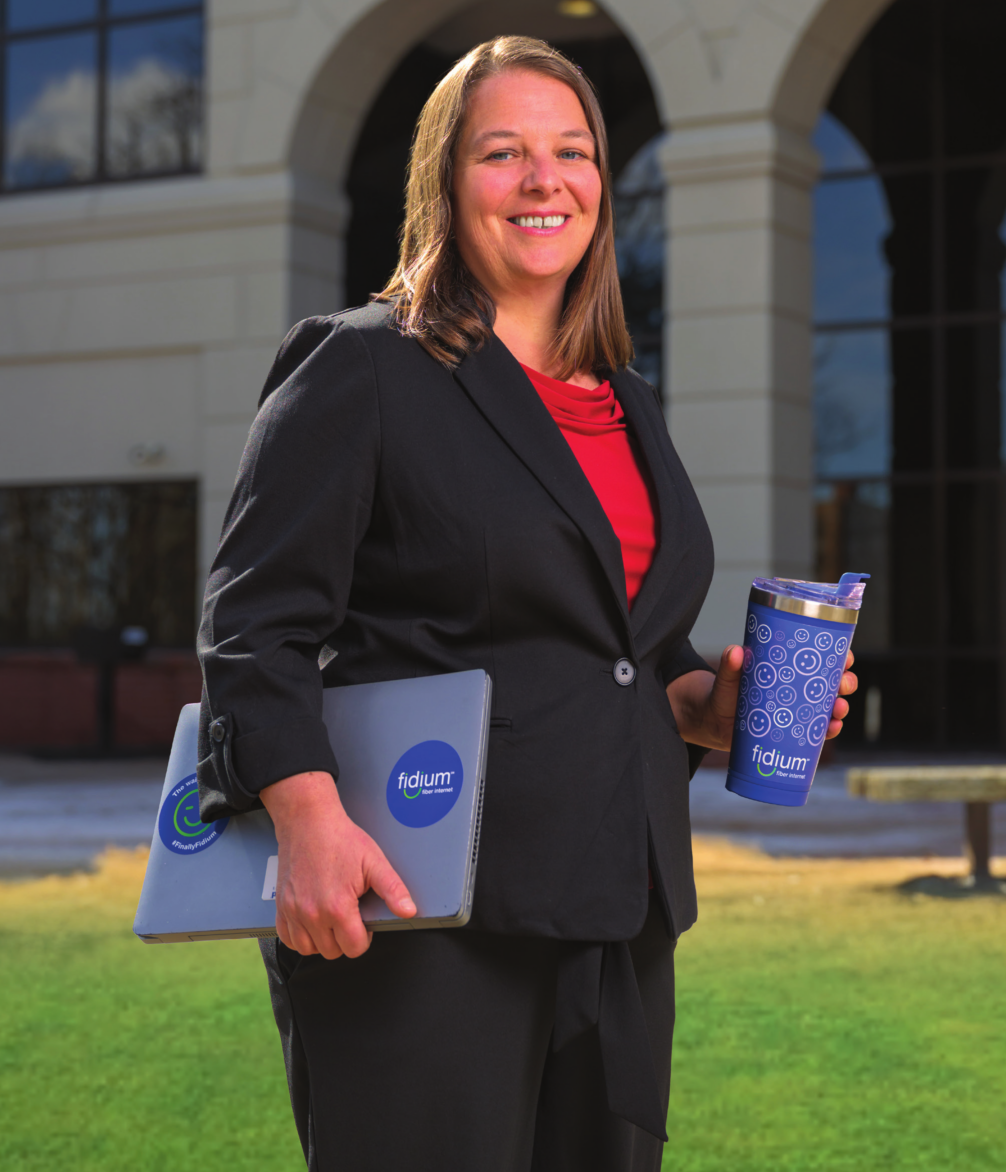
Sarah Davis has over 17
years’ telecommunications experience focused on government affairs and
legal and regulatory telecommunications policy. Davis is responsible for
drafting telecommunications deregulation laws, that have paved the way
for broadband expansion. For the last three years, Davis has led
community broadband expansion efforts, obtaining more than $230 million
in government grants, expanding broadband to tens of thousands of
unserved locations in some of the most rural regions of the Country.
Davis holds a law degree from the University of Maine School of Law and a
B.A. in government from Clark University.
How did your rural beginnings shape your advocacy for expanding broadband into such areas?
I
grew up in Bridgton, Maine, and now live in an even smaller area than
where I grew up. But (helping to expand broadband) is the most rewarding
thing I’ve ever done in my life. I have a legal and regulatory
background. I have for a long time supported our work at the Public
Utilities Commission, and with that has come a lot of interaction with
customers. Throughout my entire journey, I felt fulfilled that I get to
work with a lot of people and help solve some challenges with phone
service or broadband service. But the work I’ve been doing lately in my
market development role, working with rural communities and bringing
fiber optic broadband, I really get to see a community transform. I get
to see a place which, to some extent, can be a little left behind
because their residents don’t have access to the same broadband services
that maybe more urban communities have due to cost.
In
places like New Hampshire where you have aging populations, being able
to work from home, being able to use telehealth, to not have to drive
really far to get to a hospital or doctor’s office, to be able to put in
a job application online — the improvement to rural communities is far
more prevalent than in an urban area where you have access to all those
things. So, it’s incredibly rewarding.
We
have expanded into many New Hampshire communities — over 50 at this
point. Through this year, we will finish up two major grants. We got a
$40 million grant as part of the New Hampshire ARPA funding and then
another $8 million grant as part of the Broadband Matching Grants
initiative. And we have to complete those both by 2026. We intend to
complete a year early in this year, in 2025.
New Hampshire is really
lucky. You are really connected. You are always among the top two or
three connected states in the country. It’s incredibly rewarding to see
people get connected.
How do you communicate with customers to better serve your community?
I
think the best way that we stay current is just by being out there. Not
a day goes by me and my team are not meeting with a community, a
constituent, somebody, and talking to them about what’s going on with
respect to broadband, as well as government officials, whether it’s
local, state or federal officials. Really just understanding the needs
of those communities; not every community is the same. It’s a lot of
face time — you really have to make the connection.
Our
largest area of operations is in northern New England: Maine, New
Hampshire and Vermont. But we are in 22 states. So, I also do a fair
amount of work in Illinois, Texas, California, Pennsylvania and
Minnesota.
What advice would you give for the next generation of female business leaders?
I
say it all the time: Don’t leave anything on the table; ask for
everything. Push. Fight. You may not get it, but what’s the worst that
can happen? I find that, one of the biggest differences I find between
men and women who work for me is confidence. Some would call it ego, or
the desire to sell yourself and ask for everything that you think you’re
worth. And I think the root of it is really confidence. Never feel like
you’re asking for too much. Ask for what you want and really put
yourself out there and have all the confidence that you can get it. And I
think you’ll do much better in the world. The women behind you are
counting on you.
I
have a huge passion around athletics, and female athletics in
particular, mostly because of the skills and confidence it builds. I was
interviewing law students to help prepare them for future interviews. I
interviewed some pretty amazing women, and every single one of them
cited skills of leadership and confidence and being real go-getters came
from a time in athletics or an athletic competition when they were
either the captain of their team or had to bring their team up.